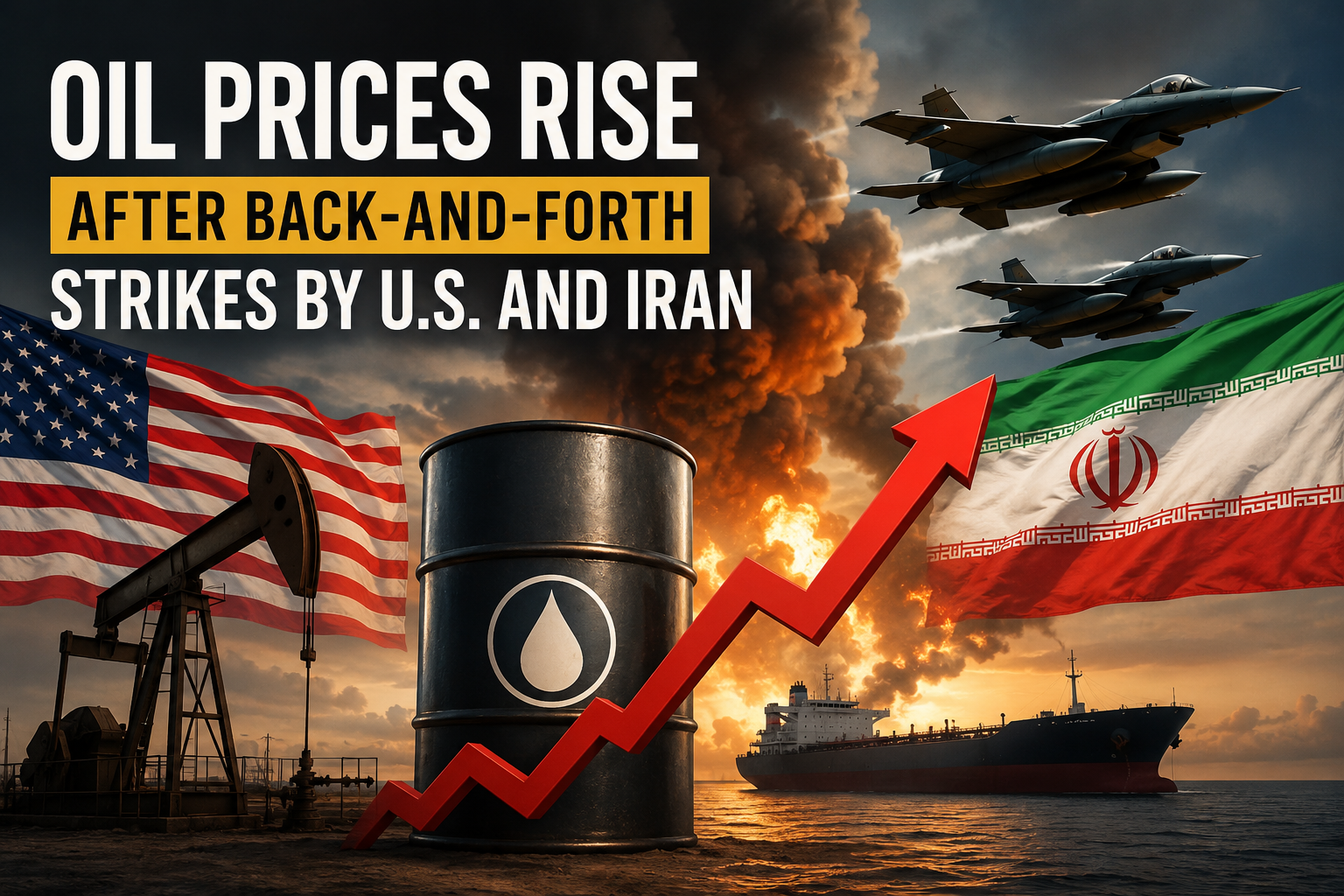
Brent and U.S. crude prices climbed after another round of attacks raised concerns about tanker traffic, global oil supplies and inflation.
Quick Answer
Oil prices rose Monday after the United States and Iran exchanged another round of attacks near the Strait of Hormuz. Brent crude gained more than 2% to trade near $77.70 a barrel after briefly moving close to $80. U.S. benchmark WTI traded near $73 as investors worried about tanker delays and possible supply losses.
Key Takeaways
Brent crude rose sharply before giving back part of its early gain.
Fresh attacks renewed concern about shipping through the Strait of Hormuz.
Higher crude prices could raise gasoline, freight and inflation costs.
Safer tanker traffic or new diplomacy could reduce the market’s risk premium.
Oil Prices Jump After Fresh Strikes
Oil prices moved higher Monday as renewed fighting between the United States and Iran created fresh uncertainty for global energy markets.
Brent crude, the main international oil benchmark, climbed more than 2% to around $77.70 per barrel during morning trading. It had risen by as much as about 5% earlier. West Texas Intermediate, or WTI, gained roughly 2% and traded close to $73.
The figures differed across reports because oil futures kept moving. Early trading showed stronger gains, while prices later eased as investors judged whether the attacks would cause a lasting supply disruption.
Why Did Oil Prices Rise?
The increase followed new U.S. strikes on Iranian targets and retaliatory attacks by Iran across the Gulf region. The violence came after an attack on a commercial container ship in the Strait of Hormuz, according to reports from the Associated Press and Reuters.
The United States said the waterway remained open to commercial traffic. Iran said it controlled or had closed the strait. These competing claims increased uncertainty for tanker operators, oil companies and insurers.
Markets often react before supplies are actually lost. Traders add a risk premium when they believe ships, ports, pipelines or production sites may be damaged.
Why the Strait of Hormuz Matters
The Strait of Hormuz is a narrow route between Iran and Oman that connects the Persian Gulf with the Arabian Sea.
The International Energy Agency says nearly 20 million barrels per day of oil passed through the strait in 2025. Only part of that volume can be moved through alternative pipelines.
If tanker traffic stays low, exporters may struggle to deliver crude and importing countries may face delays.
Readers can learn more about earlier disruptions in Wall Street Sights’ complete oil price timeline:
Tanker Traffic Is the Key Signal
For oil traders, the number of ships safely crossing the strait may matter more than political statements.
Reuters reported that vessel traffic had fallen sharply. Fewer crossings can increase freight and insurance costs even when oil fields remain undamaged.
If shipping returns closer to normal, prices could lose part of their recent gain. Prices may rise further if commercial vessels or energy facilities are attacked.
The market had recently found relief as U.S.-Iran talks appeared to improve. Wall Street Sights previously explained how diplomatic progress pushed oil prices lower:
The new violence has reversed part of that calm.
What Higher Oil Prices Mean for Americans
Crude and gasoline prices do not move in perfect step. Pump prices also depend on refinery costs, taxes, transport and local supply.
Still, a lasting crude increase can make gasoline and diesel more expensive. Airlines, trucking companies, delivery services and manufacturers may also pay more for fuel.
Those costs can reach consumers through higher airfare, shipping charges and product prices. Rising energy costs may also make the Federal Reserve more careful about lowering interest rates if inflation remains strong.
How Wall Street Could React
Energy producers often benefit when oil prices rise because each barrel may generate more revenue. Airlines and other fuel-heavy businesses can face pressure.
Broader markets may also become more volatile if investors fear higher inflation or weaker consumer spending.
https://wallstreetsights.com/category/stock-market
New investors can also review the Beginner Investing Guide:
What Happens Next?
Oil prices will likely depend on tanker traffic, military activity and diplomacy.
A safe return of commercial shipping and renewed talks could pull Brent lower. More attacks on ships, ports or energy sites could push prices higher.
For now, markets are not pricing in a complete shutdown of Gulf oil supplies. However, the renewed fighting shows how quickly prices can change when the Strait of Hormuz is at risk.
Frequently Asked Questions
Why did oil prices rise today?
Oil prices rose because new U.S.-Iran attacks increased fears of shipping delays and supply disruptions near the Strait of Hormuz.
What was the latest Brent crude oil price?
Brent traded near $77.70 per barrel during morning trading after briefly approaching $80. Prices change continuously.
What is WTI crude oil?
WTI is the main benchmark for U.S. crude oil. It traded near $73 during the session.
Why is the Strait of Hormuz important?
Nearly 20 million barrels per day of oil passed through the strait in 2025, making it a critical global energy route.
Could U.S. gasoline prices increase?
Yes. Gasoline could rise if crude remains expensive or shipping and insurance costs keep climbing.

Sarah Mitchell covers U.S. and global stock markets for Wall Street Sights, focusing on how earnings, Federal Reserve policy, and macroeconomic events move major indexes.