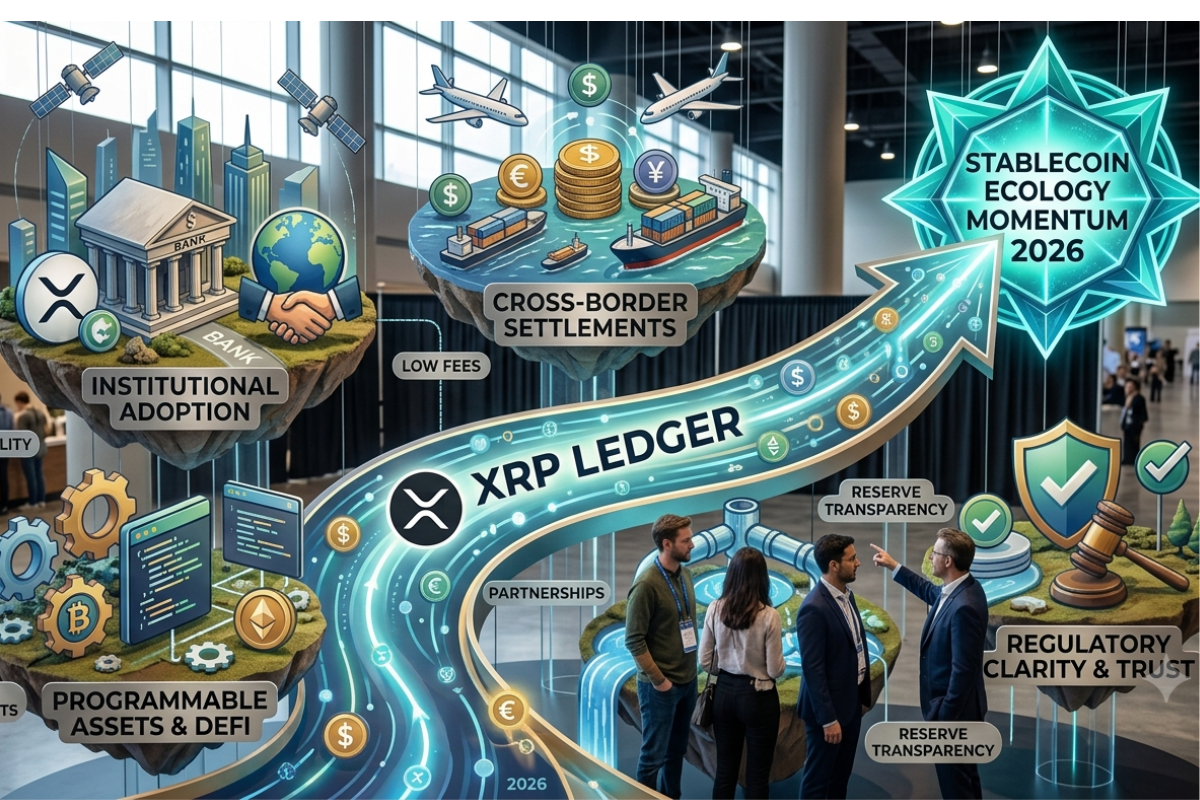
Why the XRP Ledger’s stablecoin ecosystem is gaining momentum in 2026. Learn how Ripple’s RLUSD, enterprise adoption, tokenization, and blockchain innovation are shaping the future of digital finance.
Introduction
The cryptocurrency industry has entered a new phase where real-world utility is becoming more important than speculation. While Bitcoin remains the largest digital asset and Ethereum continues to dominate decentralized applications, another blockchain ecosystem is quietly gaining momentum through a different strategy—stablecoins.
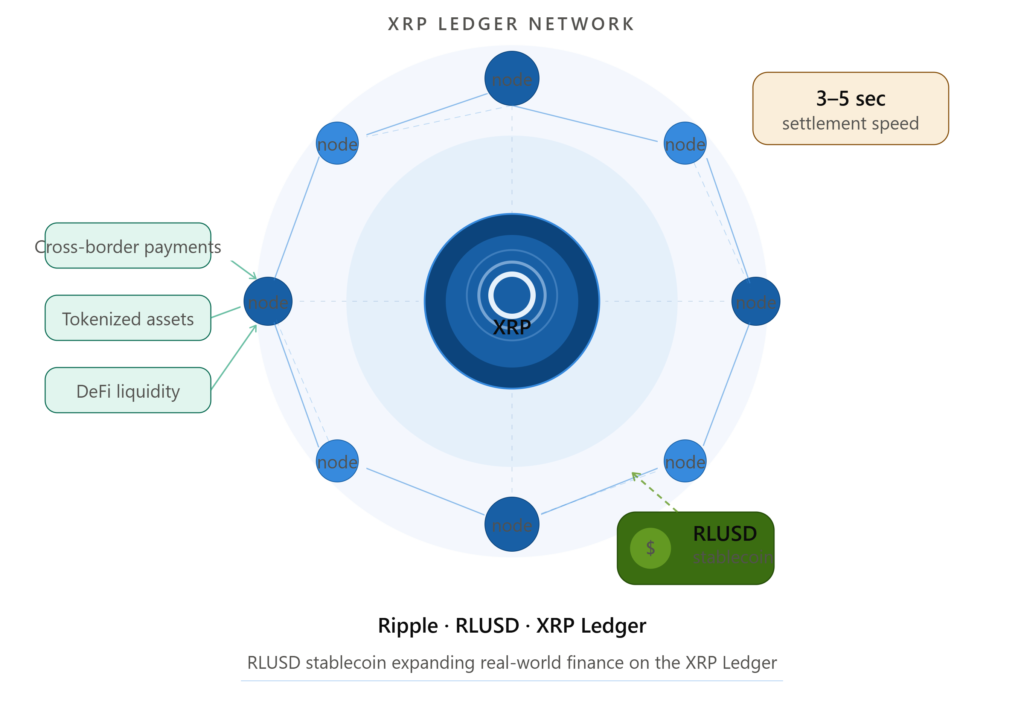
In 2026, the XRP Ledger (XRPL) has emerged as one of the most closely watched blockchain networks for enterprise-grade payments, tokenized assets, and regulated digital finance. A major reason behind this renewed attention is the rapid growth of Ripple USD (RLUSD), Ripple’s U.S. dollar-backed stablecoin designed for businesses, financial institutions, payment providers, and developers.
Unlike traditional cryptocurrencies that experience significant price swings, RLUSD is designed to maintain a stable value of one U.S. dollar. It is issued natively on both the XRP Ledger and Ethereum and is backed 1:1 by cash, cash equivalents, and short-term U.S. Treasuries. Ripple says the stablecoin is built with transparency, regulatory compliance, and institutional use in mind.
As global demand for faster and more efficient digital payments increases, many financial institutions are looking beyond speculative crypto assets. Stablecoins have become one of the fastest-growing segments of the blockchain industry because they combine the speed of blockchain transactions with the price stability of traditional currencies.
This shift is creating new opportunities for blockchain networks that can support secure, low-cost, and high-speed settlement. The XRP Ledger is positioning itself as one of those networks.
Key Takeaways
- Stablecoins are becoming a core part of modern blockchain finance.
- Ripple’s RLUSD is designed for enterprise-grade payments and financial services.
- The XRP Ledger offers fast settlement, low fees, and energy efficiency.
- Institutional interest in tokenization continues to grow.
- Real-world asset tokenization is creating new opportunities for blockchain networks.
- Developer activity and DeFi expansion are broadening XRPL’s ecosystem.
- Regulatory clarity could encourage greater enterprise adoption.
- Competition among blockchain networks remains strong.
- Long-term success will depend on continued innovation and real-world utility rather than speculation alone.
Why Stablecoins Matter More Than Ever
Stablecoins are no longer viewed simply as digital dollars used by cryptocurrency traders. Today, they play an increasingly important role in global finance by enabling:
- Faster cross-border payments
- Near-instant settlement
- Lower transaction costs
- Digital treasury management
- Tokenized asset trading
- Global remittances
- Decentralized finance (DeFi)
Businesses increasingly prefer stablecoins because they eliminate much of the volatility associated with cryptocurrencies while preserving the benefits of blockchain technology.
Industry analysts expect the global stablecoin market to continue expanding as governments introduce clearer regulations and institutions adopt blockchain-based payment infrastructure. Stablecoins are becoming essential building blocks for the future of digital finance.
Ripple’s Vision for RLUSD
Ripple launched RLUSD with a clear objective: create an enterprise-ready stablecoin that meets regulatory expectations while supporting real-world financial use cases.
According to Ripple, RLUSD is designed for:
- Cross-border payments
- International remittances
- Merchant settlements
- Foreign exchange markets
- Crypto trading
- Institutional liquidity
- Tokenized financial assets
Unlike many stablecoins that primarily target retail users, RLUSD focuses heavily on businesses and financial institutions. Ripple emphasizes compliance, reserve transparency, and interoperability across multiple blockchain networks. The company also highlights that RLUSD is redeemable 1:1 for U.S. dollars and backed by segregated reserves with regular attestations.
The XRP Ledger Advantage
The XRP Ledger has long been recognized for its efficiency in processing payments.
Compared with many blockchain networks, XRPL offers:
- Fast transaction confirmation
- Low network fees
- High transaction throughput
- Energy-efficient consensus
- Built-in decentralized exchange functionality
These characteristics make it attractive for stablecoin issuers, payment providers, and enterprises seeking predictable transaction costs and rapid settlement.
Rather than competing directly with every smart contract platform, XRPL has increasingly focused on becoming a specialized infrastructure layer for payments, tokenization, and financial services.
That strategy appears to be gaining traction in 2026 as more developers and institutions explore the network for practical financial applications. Analysts have also pointed to accelerating institutional adoption and growing RLUSD usage as important drivers of ecosystem growth.
Growing Institutional Interest
One of the biggest differences between previous crypto market cycles and today’s environment is the increasing involvement of traditional financial institutions.
Banks, payment companies, fintech firms, and asset managers are exploring blockchain technology not simply as an investment opportunity but as operational infrastructure.
Stablecoins allow institutions to:
- Move money globally within seconds
- Reduce settlement delays
- Improve liquidity management
- Simplify international payments
- Enable programmable financial services
Ripple has positioned RLUSD to serve these institutional needs while leveraging the XRP Ledger’s payment capabilities.
As a result, discussions around XRPL are increasingly centered on enterprise adoption rather than speculative trading alone.
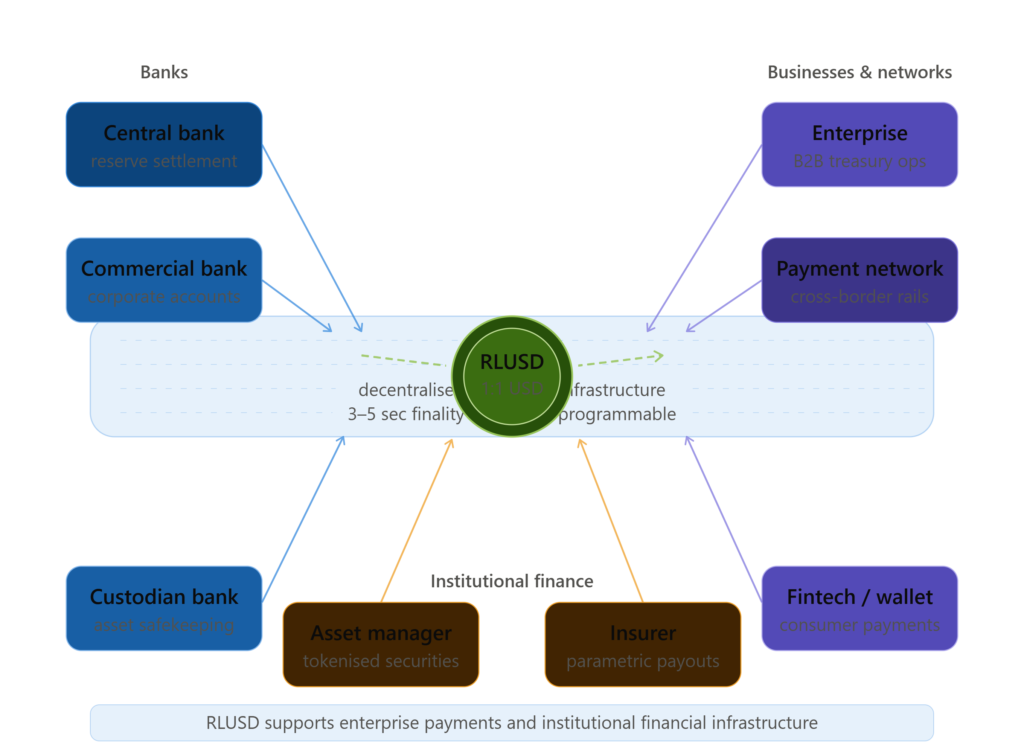
RLUSD Adoption Is Expanding Across Financial Markets
As blockchain technology becomes more integrated into mainstream finance, the demand for trusted digital assets continues to grow. Ripple’s RLUSD is designed to meet that demand by offering a stable, regulated digital dollar that can be used for payments, trading, treasury management, and tokenized financial products.
Unlike many early stablecoins that were created primarily for cryptocurrency trading, RLUSD is aimed at broader financial applications. Ripple has emphasized that the stablecoin is intended to support businesses, payment providers, financial institutions, and developers looking for reliable blockchain-based settlement.
This enterprise-first approach is helping RLUSD gain attention as organizations seek digital assets that align with evolving regulatory standards while providing the speed and efficiency of blockchain technology.
Real-World Asset (RWA) Tokenization Is Creating New Opportunities
One of the fastest-growing sectors in blockchain is the tokenization of real-world assets (RWAs). Tokenization allows ownership of traditional assets to be represented digitally on a blockchain, making transactions faster, more transparent, and easier to manage.
Examples of tokenized assets include:
- Government bonds
- Treasury bills
- Real estate
- Commodities
- Investment funds
- Corporate debt
- Precious metals
The XRP Ledger has been increasingly discussed as a platform that can support these assets because of its low transaction costs and efficient settlement system.
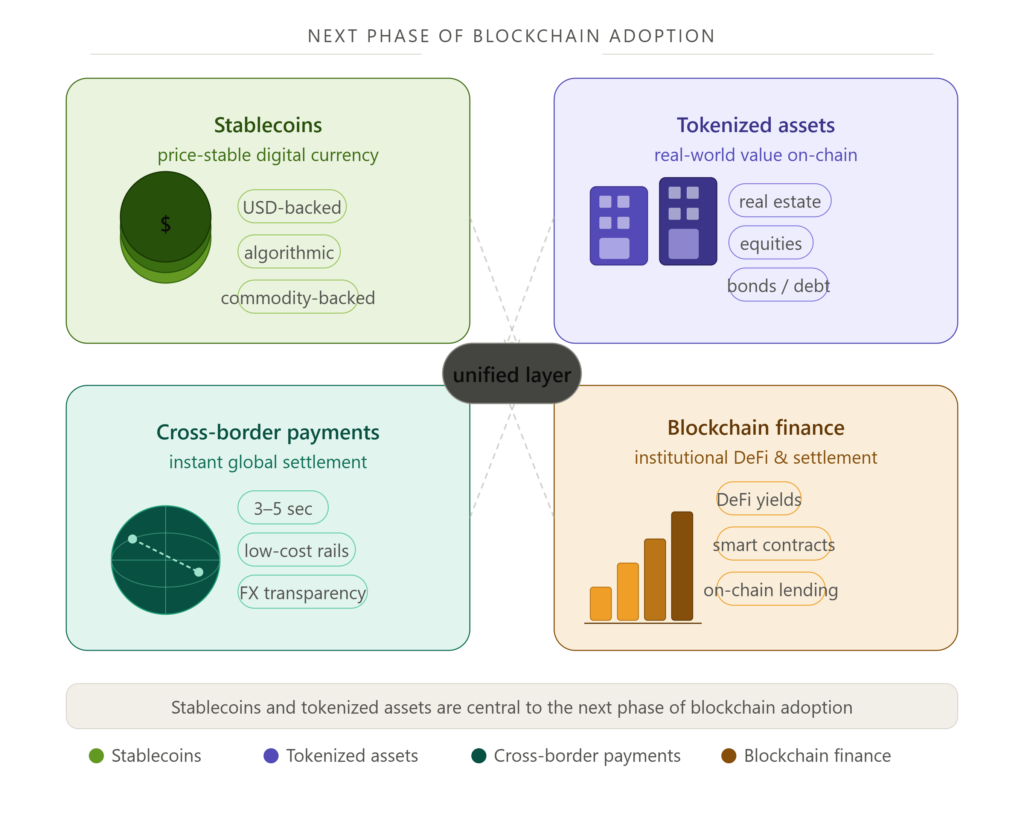
When stablecoins such as RLUSD are combined with tokenized assets, transactions can be completed almost instantly, reducing reliance on slower legacy payment systems. Many analysts believe this combination could play a major role in the future of digital finance as institutions modernize their infrastructure.
Why Enterprises Are Looking at the XRP Ledger
Large organizations evaluating blockchain technology often focus on factors beyond price performance. They need networks that offer reliability, predictable costs, and operational efficiency.
Several features make the XRP Ledger attractive for enterprise adoption:
Fast Settlement
Payments on the XRP Ledger are typically confirmed within seconds, allowing businesses to move funds more quickly than with many traditional banking systems.
Low Transaction Costs
Transaction fees on XRPL are generally very small, making the network suitable for both high-value transfers and large volumes of smaller transactions.
Energy Efficiency
The XRP Ledger uses a consensus mechanism that consumes significantly less energy than proof-of-work blockchains. This aligns with sustainability goals that many enterprises now consider when adopting new technologies.
Built-In Tokenization Capabilities
The network supports the issuance and management of digital assets, making it suitable for businesses exploring tokenized financial products.
These characteristics continue to strengthen XRPL’s position as a blockchain focused on practical financial applications rather than speculative use alone.
DeFi on the XRP Ledger Is Evolving
Decentralized Finance (DeFi) has traditionally been associated with blockchain networks that offer extensive smart contract functionality. However, the XRP Ledger ecosystem has steadily expanded its own decentralized finance capabilities.
Developers are building applications that aim to provide:
- Decentralized exchanges
- Lending services
- Borrowing markets
- Liquidity pools
- Yield opportunities
- Cross-chain interoperability
Community discussions around proposed XRPL protocol upgrades, including lending-related features, have generated significant interest because they could broaden the range of financial services available on the network.
While these developments are still evolving, they reflect a broader effort to make the XRP Ledger more competitive within the growing DeFi landscape.
Growing Developer Activity
A successful blockchain ecosystem depends not only on users but also on developers who build applications, tools, and infrastructure.
The XRP Ledger community has seen continued development across areas such as:
- Payment applications
- Stablecoin integrations
- Tokenization platforms
- Digital identity solutions
- NFT marketplaces
- Cross-border payment services
Developer grants, community initiatives, and open-source contributions have helped expand the ecosystem, encouraging innovation while supporting enterprise adoption.
As more projects launch on XRPL, the network’s utility extends beyond payments into a broader range of blockchain-based financial services.
Regulatory Clarity Supports Adoption
One of the key factors influencing institutional blockchain adoption is regulatory certainty.
Businesses are generally more willing to integrate blockchain technology when they have greater confidence in the legal and compliance framework surrounding digital assets.
Ripple has consistently emphasized transparency, reserve backing, and compliance for RLUSD. This focus is intended to address concerns that have historically limited institutional participation in the stablecoin market.
As regulators around the world continue developing frameworks for digital assets, compliant stablecoins are expected to play an increasingly important role in bridging traditional finance with blockchain technology.
The Bigger Picture
The momentum behind the XRP Ledger is not driven by a single product or announcement. Instead, it reflects several trends converging at the same time:
- Rising demand for regulated stablecoins.
- Increased interest in tokenized real-world assets.
- Enterprise adoption of blockchain for payments.
- Expansion of decentralized finance.
- Growth in developer activity.
- Continued focus on regulatory compliance.
Together, these developments suggest that the XRP Ledger is evolving into a broader financial ecosystem capable of supporting a wide range of digital asset use cases.
Market Outlook: What XRPL’s Momentum Could Mean for the Future
The blockchain industry is becoming more competitive as networks compete to attract developers, financial institutions, and enterprise users. Instead of focusing only on cryptocurrency trading, many blockchain platforms are now building infrastructure for real-world financial applications.
The XRP Ledger is part of this shift. Its emphasis on fast settlement, low transaction costs, and enterprise-focused tools has positioned it as a network that aims to support payments, tokenization, and digital asset infrastructure.
While competition remains strong, the growing interest in stablecoins and tokenized assets has created new opportunities for blockchain networks that can deliver reliable performance and regulatory-friendly solutions.
How XRPL Compares With Other Blockchain Networks
Several blockchain ecosystems are competing for leadership in digital payments and tokenization.
Ethereum
Ethereum remains the largest ecosystem for decentralized finance and stablecoins. It supports thousands of decentralized applications and has the widest developer community.
However, network congestion and transaction fees can increase during periods of heavy activity, making cost-sensitive payment use cases more challenging.
Stellar
Stellar has built a strong reputation in cross-border payments and financial inclusion. It also continues expanding its role in tokenized assets and stablecoin issuance.
Because Ripple and Stellar share similar goals around payments, they are often compared by analysts evaluating enterprise blockchain adoption.
XRP Ledger
Rather than trying to dominate every blockchain category, the XRP Ledger has focused on several core strengths:
- Fast payment settlement
- Low transaction costs
- Enterprise financial infrastructure
- Stablecoin support
- Tokenized asset issuance
- Cross-border payment efficiency
This specialization may help XRPL carve out a distinct role within the broader digital asset ecosystem.
Opportunities That Could Drive Future Growth
Several trends may continue supporting XRP Ledger adoption over the coming years.
Expansion of Stablecoins
As governments introduce clearer regulatory frameworks, more businesses may adopt regulated stablecoins for everyday financial operations.
RLUSD could benefit if institutions continue looking for compliant digital dollars that work across blockchain networks.
Growth of Tokenized Assets
Financial firms increasingly view tokenization as a way to improve market efficiency.
If tokenized bonds, funds, and other financial products continue expanding, blockchain networks capable of supporting these assets may experience greater adoption.
Cross-Border Payments
International payments remain one of blockchain’s strongest real-world use cases.
Traditional cross-border transfers often involve multiple intermediaries, higher fees, and settlement delays.
Blockchain-based settlement networks like XRPL aim to simplify this process by enabling faster movement of value across borders.
Enterprise Partnerships
Large financial institutions typically adopt technology gradually.
As more pilot projects move into production, enterprise blockchain networks could benefit from increased transaction volumes and broader commercial adoption.
Challenges That Remain
Despite growing optimism, several challenges could influence how quickly the XRP Ledger ecosystem expands.
Regulatory Changes
Digital asset regulations continue evolving around the world.
Future policy decisions could affect how stablecoins are issued, traded, and integrated into financial services.
Competition
The blockchain sector remains highly competitive.
Ethereum, Stellar, Solana, Avalanche, and other networks continue investing heavily in payments, tokenization, and decentralized finance.
Maintaining developer interest and attracting enterprise users will remain important priorities for XRPL.
Market Volatility
Although stablecoins are designed to reduce price volatility, the broader cryptocurrency market still experiences rapid changes in investor sentiment.
Market conditions can influence adoption, liquidity, and investment activity across blockchain ecosystems.
What This Means for XRP Holders
Many investors naturally wonder whether growth in the XRP Ledger ecosystem could influence demand for XRP itself.
While XRP and RLUSD serve different purposes, increased activity on the XRP Ledger may contribute to broader network usage.
For example:
- More businesses using XRPL could increase overall transaction volume.
- New decentralized applications may attract additional users.
- Growth in tokenized assets could expand blockchain utility.
- Enterprise adoption may strengthen confidence in the ecosystem.
However, the relationship between ecosystem growth and XRP’s market price is influenced by many factors, including market conditions, regulation, investor sentiment, and broader cryptocurrency trends. Growth in network activity does not guarantee changes in the value of XRP.
Looking Ahead
The XRP Ledger’s progress in 2026 reflects a broader transformation taking place across digital finance.
Stablecoins are moving beyond crypto trading into mainstream payment systems.
Tokenized assets are attracting increasing attention from financial institutions.
Businesses are exploring blockchain as infrastructure rather than simply as an investment opportunity.
Within this changing landscape, the XRP Ledger continues developing tools aimed at enterprise adoption while expanding support for stablecoins, tokenization, and decentralized finance.
Whether this momentum translates into long-term leadership will depend on continued innovation, regulatory developments, and the willingness of institutions to integrate blockchain into everyday financial operations.
One thing is becoming increasingly clear: the conversation around XRPL is shifting from speculation toward practical utility, and that transition could shape the network’s role in the next generation of global digital finance.
Read More
Wealthy Father’s Multi-Million-Dollar Football Dream Ends in Controversy
Frequently Asked Questions
What is the XRP Ledger (XRPL)?
The XRP Ledger is an open-source blockchain designed for fast, low-cost digital payments and the issuance of digital assets. It is known for quick transaction settlement and energy-efficient consensus.
What is RLUSD?
RLUSD is Ripple’s U.S. dollar-backed stablecoin. It is designed to maintain a stable value of one U.S. dollar and is intended for enterprise payments, trading, and tokenized financial applications.
Why are stablecoins becoming more important?
Stablecoins combine blockchain speed with the relative price stability of traditional currencies, making them useful for payments, remittances, settlements, and decentralized finance.
How does RLUSD differ from XRP?
RLUSD is a stablecoin designed to maintain a fixed value, while XRP is a digital asset used for liquidity and value transfer on the XRP Ledger. They serve different purposes within the ecosystem.
Why is institutional adoption important for XRPL?
Institutional participation can increase blockchain usage through payment systems, treasury operations, and tokenized financial products, helping expand the overall ecosystem.
What are tokenized real-world assets (RWAs)?
RWAs are traditional assets—such as bonds, real estate, or commodities—represented as digital tokens on a blockchain, enabling more efficient trading and settlement.
Can businesses use RLUSD for cross-border payments?
Ripple intends RLUSD to support business payments, international settlements, and other enterprise financial use cases.
Is the XRP Ledger energy efficient?
Yes. The XRP Ledger uses a consensus mechanism that consumes significantly less energy than proof-of-work blockchains.
What role does DeFi play on XRPL?
Developers are expanding decentralized finance capabilities on XRPL through applications for trading, liquidity, lending, and other financial services.
Source.pluang.com

Sarah Mitchell covers U.S. and global stock markets for Wall Street Sights, focusing on how earnings, Federal Reserve policy, and macroeconomic events move major indexes.