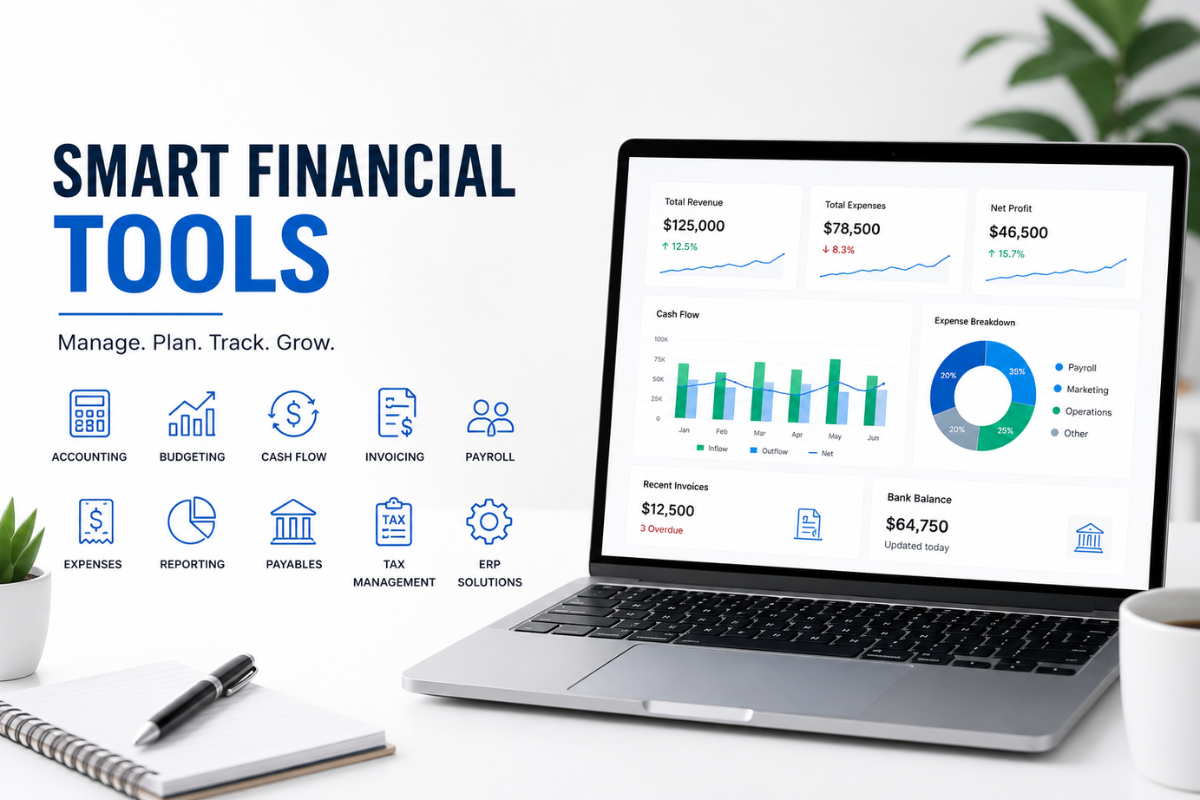
Managing money is one of the most important parts of running a successful business. Whether you own a startup, an online store, or a growing company, the right financial tools can help you save time, reduce errors, improve cash flow, and make better decisions.
In 2026, businesses that use modern financial software often have a major advantage over competitors that still rely on spreadsheets and manual processes.
Table of Contents
Here are the most important financial management tools every business should have.
1. Accounting Software

Why it matters
- Records every transaction automatically
- Generates profit-and-loss statements
- Helps with tax preparation
- Reduces bookkeeping mistakes
Popular options
- QuickBooks
- Xero
- FreshBooks
2. Budgeting and Forecasting Tools

Benefits
Planning
- Set financial goals
- Predict future cash needs
- Avoid overspending
- Prepare for slow business periods
Best for
Startups and growing businesses that need better financial planning.
3. Cash Flow Management Tools

Key features
- Track incoming payments
- Monitor upcoming bills
- Forecast cash shortages
- Improve working capital
4. Invoicing Software

What it does
- Create professional invoices
- Send automatic payment reminders
- Accept online payments
- Track unpaid invoices
5. Expense Tracking Tools

Useful features
- Receipt scanning
- Expense categorization
- Employee reimbursements
- Real-time spending reports
6. Payroll Software

Why businesses need it
- Automatic salary calculations
- Tax deductions
- Direct deposits
- Compliance reporting
7. Financial Reporting and Analytics

Important reports
- Profit & Loss (P&L)
- Balance Sheet
- Cash Flow Statement
- Revenue Trends
- Expense Analysis
Must-Have Tool Stack for Small Businesses
Recommended setup
| Business Need | Tool Type |
|---|---|
| Bookkeeping | Accounting Software |
| Planning | Budgeting Tool |
| Invoices | Invoicing Software |
| Expenses | Expense Tracker |
| Employees | Payroll Software |
| Cash Monitoring | Cash Flow Tool |
| Decision Making | Analytics Dashboard |
The Bottom Line
What successful businesses do
Successful businesses do not manage finances by guesswork. They use tools that provide real-time visibility, automation, and accurate reporting.
For most small and medium businesses, the best starting point is a combination of accounting software, invoicing tools, expense tracking, and cash flow management. As the business grows, budgeting, payroll, and analytics tools become increasingly important.
Investing in the right financial management system today can help your business save money, grow faster, and avoid costly mistakes tomorrow.
Read more.
Annual Stock Market Report 2026 | S&P 500, Dow & Nasdaq Review
Complete Oil Price Timeline: History, Crashes, Booms & Global Events (1970–2026)
FAQ
What is the most important financial tool for a business?
Accounting software is usually the most important because it tracks income, expenses, profits, and taxes.
Do small businesses need cash flow management tools?
Yes. Cash flow tools help businesses avoid running out of money even when sales are strong.
Which accounting software is best for beginners?
QuickBooks
Quickbook and FreshBooks are popular beginner-friendly options.
Why is budgeting important?
Budgeting helps businesses plan spending, control costs, and prepare for future growth.

James Carter covers international news and geopolitics for Wall Street Sights, with a focus on how global events affect markets, trade, and the U.S. economy.