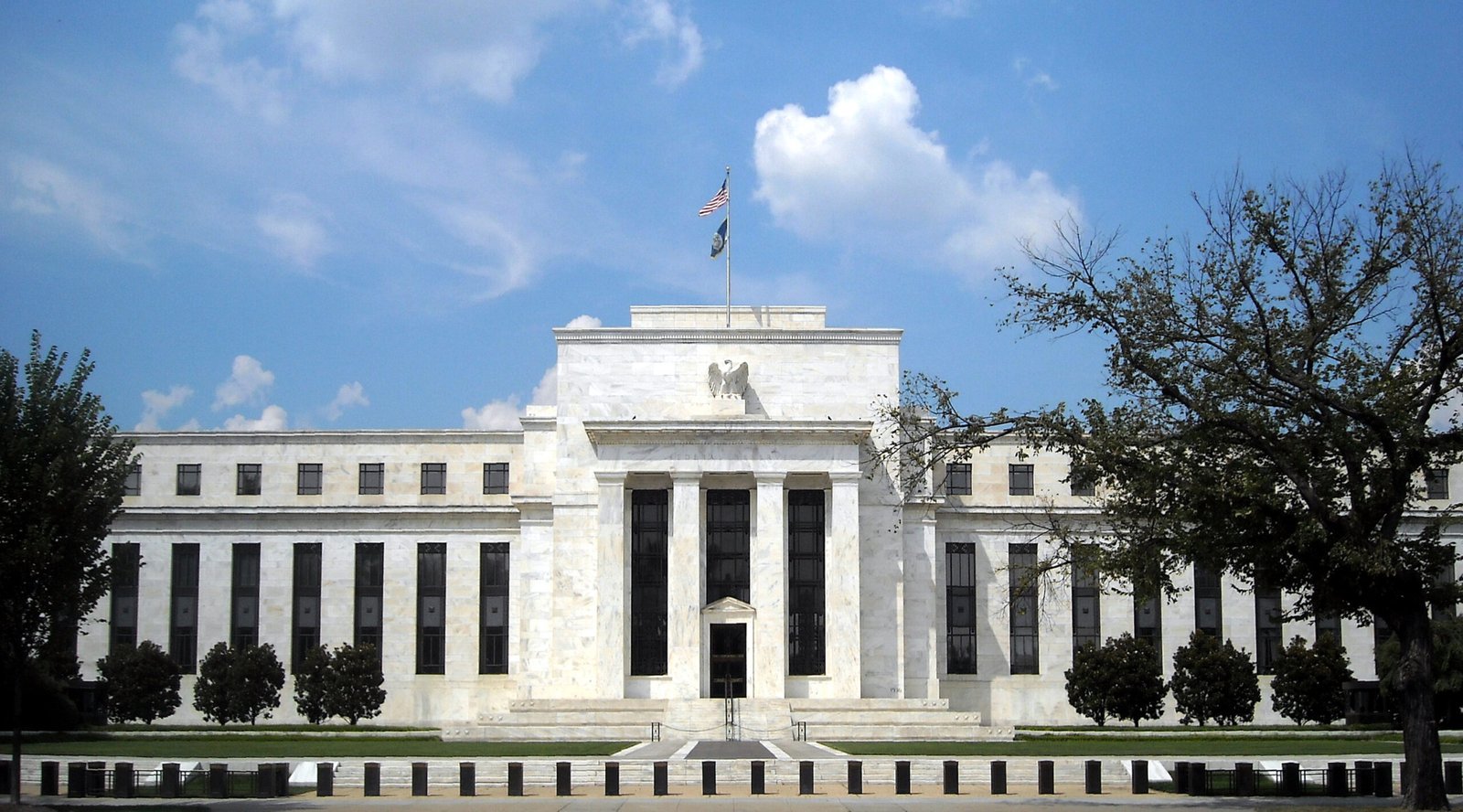
The Federal Reserve is the central bank of the United States. It sets a key interest rate that ripples through mortgages, credit cards, savings accounts, and the stock market. This guide explains what the Fed does, how it makes decisions, and how those decisions eventually show up in your own finances.
Quick Answer
The Federal Reserve (“the Fed”) is the U.S. central bank. Its main interest rate tool, the federal funds rate, influences how expensive it is to borrow money across the entire economy. When the Fed raises rates, borrowing gets more expensive and saving tends to pay more. When it cuts rates, borrowing gets cheaper and savings yields tend to fall. The Fed’s decisions come from a committee called the FOMC, which meets eight times a year.
Key Takeaways
- The Fed doesn’t set one single interest rate for the economy — it sets a target range for the federal funds rate, the rate banks charge each other for overnight loans.
- The Federal Open Market Committee (FOMC) meets eight times a year to decide whether to raise, cut, or hold that rate.
- The Fed has two main goals, known as its “dual mandate”: stable prices (around 2% inflation) and maximum sustainable employment.
- Rate changes take time to reach the real economy — mortgage rates, credit card APRs, and savings yields don’t move instantly or by the exact same amount.
- Four times a year, the Fed publishes a “dot plot” showing where individual officials expect rates to go.
What the Federal Reserve Actually Does
The Federal Reserve System was created by Congress in 1913 to manage the country’s money supply and keep the banking system stable. Today its best-known job is setting short-term interest rates through the Federal Open Market Committee, or FOMC. The Fed doesn’t control mortgage rates, credit card rates, or stock prices directly — it influences a single rate that then works its way through the rest of the financial system.
The Fed operates under what’s called a “dual mandate” from Congress: keep prices stable (targeting around 2% annual inflation) and support maximum sustainable employment. Most Fed decisions come down to balancing those two goals. Raising rates typically cools inflation but can slow hiring and growth. Cutting rates typically supports growth and hiring but can push inflation higher.
How the Federal Funds Rate Works
Banks are required to keep a certain amount of cash on hand. When one bank has extra cash and another needs more to meet its requirements overnight, they lend to each other, and the interest rate on those loans is the federal funds rate. The FOMC sets a target range for this rate (for example, 3.50% to 3.75%) rather than one exact number, and the Fed uses tools like adjusting the interest it pays banks on reserves to keep the actual rate trading inside that range.
This rate matters far beyond the banks trading it overnight, because it’s the foundation other borrowing costs are built on. Banks set their “prime rate” — the rate they charge their most creditworthy customers — a few percentage points above the federal funds rate, and many credit cards, home equity lines, and small business loans are priced directly off the prime rate.
The FOMC and the Meeting Schedule
The Federal Open Market Committee has 12 voting members: the seven members of the Fed’s Board of Governors, the president of the Federal Reserve Bank of New York, and four of the remaining eleven regional Reserve Bank presidents, who rotate onto the committee each year. The FOMC meets eight times a year, roughly every six to eight weeks, to review economic data and vote on where to set the federal funds rate target.
Each meeting ends with a policy statement and, in most cases, a press conference from the Fed Chair explaining the decision. Four of the eight meetings each year (typically March, June, September, and December) also include updated economic projections from Fed officials, including the dot plot covered below.
How a Rate Decision Reaches Your Wallet
| What You Have | How It’s Affected | How Directly It Tracks the Fed |
|---|---|---|
| Credit cards | Most cards have a variable APR tied to the prime rate, which moves closely with the fed funds rate | Direct and fast, usually within a billing cycle or two |
| Savings accounts & CDs | Banks tend to raise savings yields when the Fed raises rates, though not always by the same amount | Fairly direct, but banks move at their own pace |
| Mortgages | Mortgage rates track the 10-year Treasury yield and investor expectations for future Fed moves, not the fed funds rate itself | Indirect — mortgage rates can move before or after an actual Fed decision |
| Auto loans | Tend to follow bank funding costs, which are influenced by the fed funds rate | Moderately direct |
| Stock market | Lower rates can make future company profits look more valuable today; higher rates can pressure stock valuations, especially for growth stocks | Indirect and often priced in before the meeting happens |
The Dot Plot, Explained
Four times a year, the Fed releases the Summary of Economic Projections, which includes a chart nicknamed the “dot plot.” Each dot represents one FOMC participant’s anonymous estimate of where the federal funds rate will be at the end of the current year, the next two years, and over the longer run. It is not a promise or a vote — it’s a snapshot of individual expectations that can, and often does, change at the next quarterly update as new economic data comes in.
Investors watch the dot plot closely because it offers a rare direct look at how Fed officials themselves expect policy to evolve, beyond what’s in the official statement.
Rate Hikes, Cuts, and Pauses: What’s the Difference
A rate hike raises the target range, typically to fight inflation that’s running above the Fed’s 2% goal. A rate cut lowers the target range, typically to support a slowing economy or rising unemployment. A pause (or “hold”) keeps the rate unchanged, which the Fed often does when it wants to see more data before committing to a direction, or when the economy looks balanced between its two goals.
Common Misunderstandings About the Fed
- “The Fed sets mortgage rates.” It doesn’t directly. Mortgage rates respond more to the 10-year Treasury yield and investor expectations than to the fed funds rate itself.
- “A rate hold means nothing is happening.” Markets react to the tone of the Fed’s statement and press conference even when the rate itself doesn’t change.
- “The dot plot is a promise.” It’s a snapshot of individual, anonymous projections — not a commitment, and it changes quarter to quarter.
- “Only the Fed Chair decides.” The Chair runs the meeting and speaks for the committee, but the federal funds rate target is set by a vote of the full FOMC.
What to Watch at Each Meeting
Beyond the headline rate decision, three things tend to move markets most: the vote count (a split vote can signal disagreement about the path ahead), the language changes in the policy statement compared to the prior meeting, and, at quarterly meetings, any shift in the dot plot from the previous update.
FAQ
How often does the Fed meet?
The FOMC holds eight regularly scheduled meetings a year, roughly every six to eight weeks. It can also hold emergency meetings if conditions require it.
Who decides the interest rate?
The 12 voting members of the Federal Open Market Committee decide by vote. This includes the seven Fed Board of Governors, the New York Fed president, and four rotating regional Reserve Bank presidents.
Does the Fed control mortgage rates?
Not directly. Mortgage rates are driven more by the 10-year Treasury yield and investor expectations about future Fed policy than by the federal funds rate itself.
What is the dot plot?
A chart, published four times a year, showing individual FOMC participants’ anonymous projections for where interest rates will be in future years. It is not a vote or a promise.
What’s the difference between a rate hike, cut, and pause?
A hike raises rates to fight inflation, a cut lowers rates to support growth or employment, and a pause holds rates steady while the Fed waits for more data.
Sources
- Federal Reserve — Federal Open Market Committee
- Federal Reserve — Meeting Calendars and Information
- Federal Reserve — Summary of Economic Projections
This guide is for general information and is not personalized financial advice. Talk to a licensed financial advisor about how interest rate changes affect your specific situation.
Related Reading
- What Is the Federal Funds Rate? A Plain-English Guide
- How Fed Rate Decisions Affect Mortgage Rates
- How Fed Rate Decisions Affect Savings and CD Yields
- The Fed’s Dot Plot, Explained
- Fed Rate Pause vs. Rate Cut: What’s the Difference?
- Fed Meeting July 2026: What the Interest Rate Decision Means for You
- Emergency Fund Guide 2026: How Much to Save and Where to Keep It
- Credit Score Guide 2026

Sarah Mitchell covers U.S. and global stock markets for Wall Street Sights, focusing on how earnings, Federal Reserve policy, and macroeconomic events move major indexes.