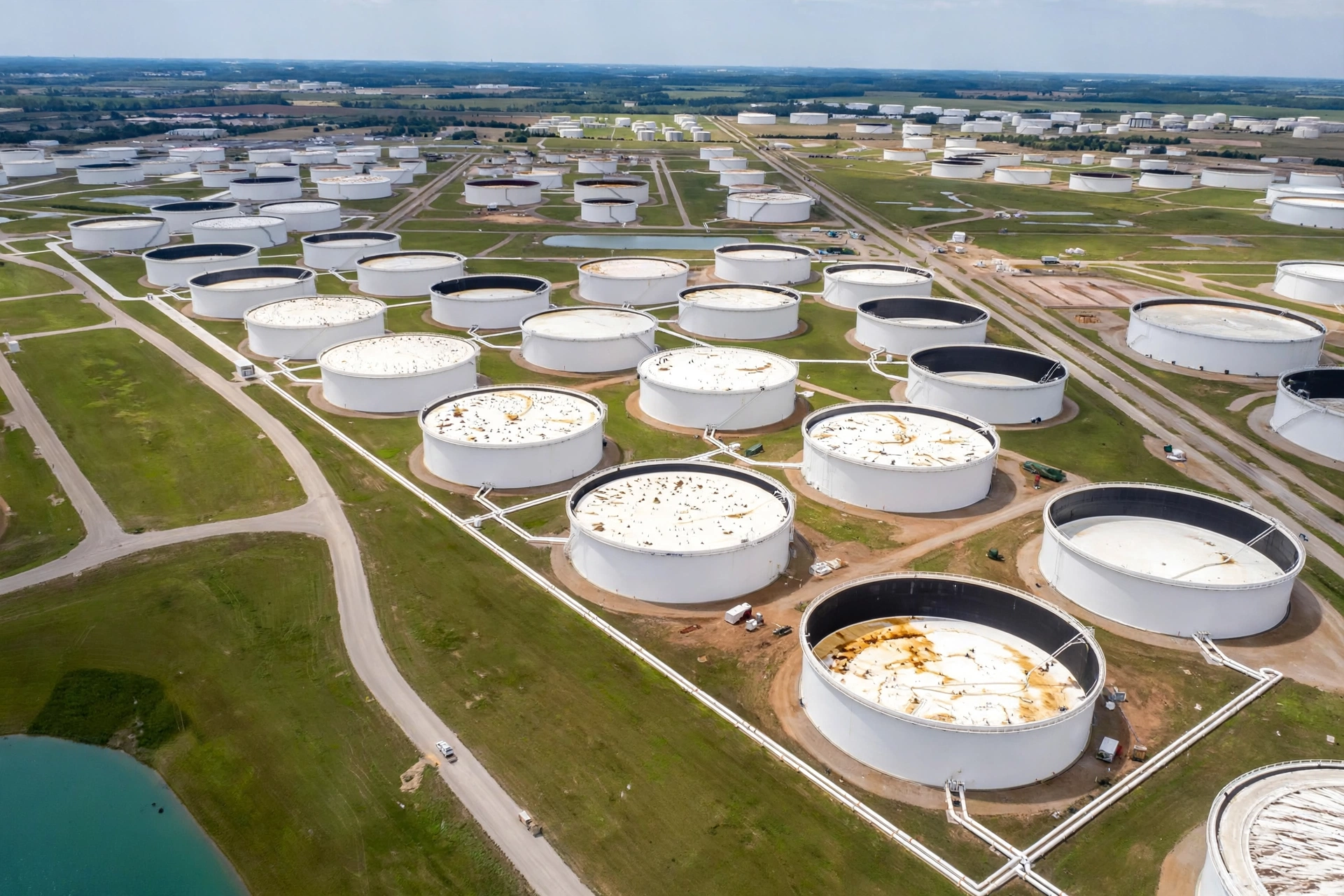
The U.S. Strategic Petroleum Reserve has fallen to 311.4 million barrels, its lowest level since March 1983, after months of emergency releases tied to the war with Iran. Beyond the low number, a government watchdog says the reserve’s aging infrastructure means it can’t even be drawn down at its intended speed.
Key Facts
- The reserve fell by about 5.1 million barrels in the week ending July 17, its 17th straight weekly decline, bringing total stocks to 311.4 million barrels.
- SPR inventories have dropped roughly 104 million barrels since the U.S.-Iran war began in late February.
- The releases stem from a 172-million-barrel commitment the Trump administration announced on March 11, part of a broader 400-million-barrel action coordinated by the International Energy Agency across 32 member nations.
- A Government Accountability Office report found the reserve could only draw down oil at about 61% of its intended rate as of December 2025, and could only accept returning crude at 56% of its designed capacity.
- Total U.S. oil inventories, combining commercial and reserve stocks, fell to their lowest level since 1984.
Why the Reserve Exists
The Strategic Petroleum Reserve was created in 1975 in response to Iranian oil embargoes in the 1970s. It’s meant to work as a buffer, oil the government can release quickly to soften the impact of a war or supply shock, rather than a reserve meant to be tapped regularly. Since the U.S.-Iran war began at the end of February, the reserve has done exactly the job it was designed for, offsetting supply disruptions caused by fighting near the Strait of Hormuz, a chokepoint that carried about 20% of the world’s oil before the conflict started.
The Bigger Problem: Aging Infrastructure
The falling barrel count is only part of the story. The GAO report, released in early July, found the reserve’s physical infrastructure has degraded to the point that it can’t fully deliver on its mission even when needed most. Some of the reserve’s underground storage caverns and pipeline systems are decades old and in need of repair. The report noted that a $1.4 billion infrastructure overhaul, called Life Extension Phase 2, has repeatedly fallen behind schedule and shrunk in scope over the past decade, and that the Department of Energy hasn’t updated its overall strategy for the reserve in nearly ten years.
Why This Matters Beyond the Barrel Count
A reserve that’s both low on oil and mechanically limited in how fast it can release that oil is a weaker safety net than the barrel count alone suggests. If a new supply shock hit tomorrow, on top of the ongoing Iran conflict, the reserve’s reduced capacity means the U.S. would have less capacity to respond quickly, even with oil still in storage. That combination, a shrinking reserve and aging equipment, is why energy analysts have flagged this less as a single alarming headline and more as a structural vulnerability building over time.
What This Means for You
A smaller, slower-to-use reserve doesn’t directly change gas prices today, but it does reduce the government’s ability to cushion prices if the Iran conflict escalates further or another supply disruption occurs elsewhere. Exchange agreements the government has in place could eventually return more crude than was released, potentially rebuilding the reserve above 400 million barrels over time, but that process depends on market conditions and hasn’t been guaranteed on any specific timeline.
Sources
- CNBC — US Strategic Petroleum Reserve faces stress as emergency releases strain old infrastructure
- S&P Global — US strategic oil reserve falls to lowest level since 1983
- TankTransport — Strategic Petroleum Reserve: Critical Facts at 1983 Low
Related reading: our coverage of the intercepted Iranian missile attack and oil price swings tied to the conflict track how this war keeps affecting energy markets.

James Carter covers international news and geopolitics for Wall Street Sights, with a focus on how global events affect markets, trade, and the U.S. economy.