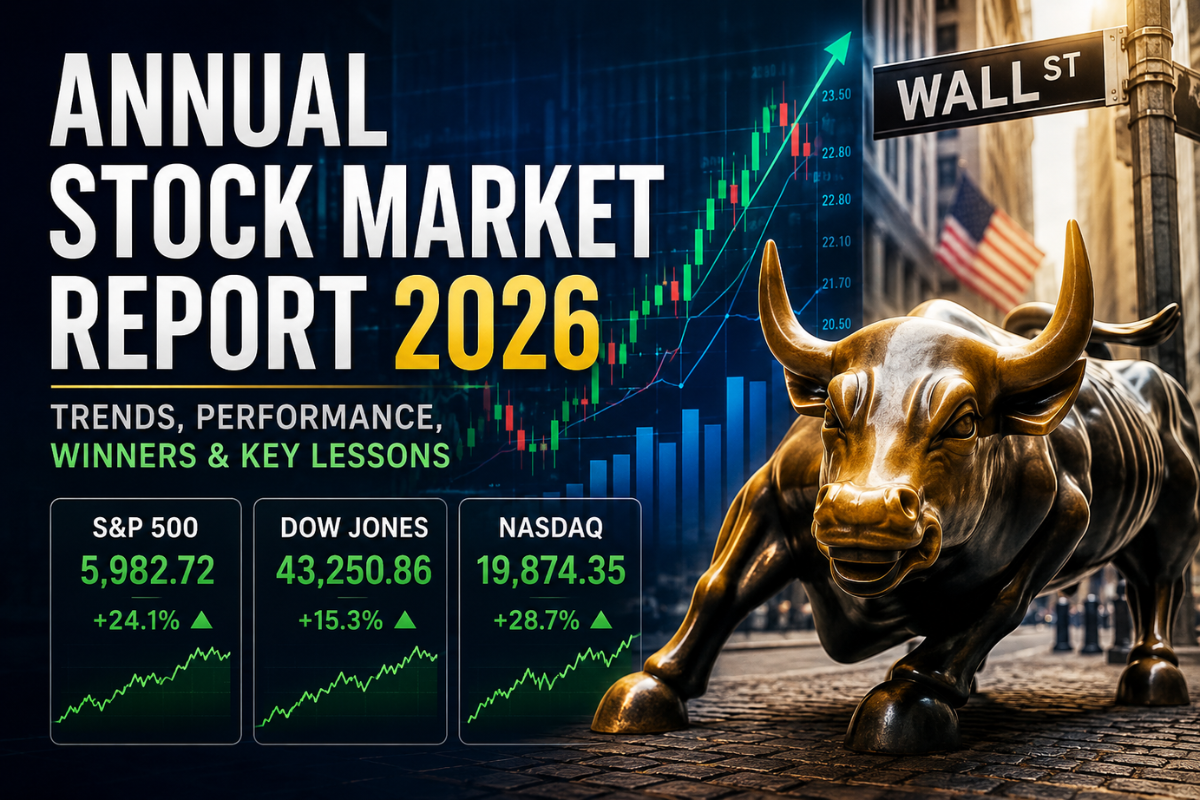
Explore the 2026 annual stock market report covering S&P 500 performance, Dow Jones, Nasdaq, AI-driven growth, sector trends, corporate earnings, and key investor lessons.
Annual Stock Market Report 2026
The U.S. stock market delivered another memorable year in 2026. Investors navigated changing interest-rate expectations, strong corporate earnings, rapid growth in artificial intelligence, energy price swings, and global geopolitical developments. While markets experienced periods of volatility, major indexes remained supported by optimism around technology spending and business profits.
This report reviews the biggest themes of the year and explains them in clear, easy-to-understand language.
Overview of the 2026 Market
Through much of 2026, U.S. equities benefited from resilient corporate earnings and continued investment in AI infrastructure. Technology companies and semiconductor firms attracted significant investor attention, helping lift broader indexes despite periodic pullbacks tied to inflation worries and geopolitical risks. Market performance varied across sectors, but innovation remained a key driver.
S&P 500 Performance
The S&P 500 remained one of the best indicators of overall U.S. market health. Large-cap companies in technology, healthcare, finance, and consumer sectors contributed to gains.
Strong earnings and investor confidence in AI-related spending helped push the index to record levels during parts of the year. Analysts also raised year-end expectations after better-than-expected corporate results.
Key Drivers
- Strong earnings growth
- AI infrastructure investment
- Stable consumer demand
- Expectations surrounding Federal Reserve policy
- Continued capital spending by major technology companies
Dow Jones Industrial Average
The Dow Jones reflected the performance of many established American businesses. Compared with technology-focused indexes, its gains were steadier and generally more moderate because of its composition.
Industrial firms, financial institutions, healthcare companies, and consumer businesses all influenced Dow performance throughout the year. The index also saw changes in its membership as it continued evolving to reflect the modern U.S. economy.
Nasdaq Performance
The Nasdaq once again led much of the market conversation.
Technology companies, chipmakers, software firms, and AI-related businesses fueled strong advances during rallies. At the same time, the index showed higher volatility than the broader market whenever investors questioned valuations or interest-rate expectations.
Best-Performing Sectors
Technology
Artificial intelligence, cloud computing, semiconductors, and software remained among the strongest-performing themes.
Healthcare
Medical innovation and biotechnology continued attracting investor interest.
Financial Services
Banks and financial firms adapted to changing monetary policy while expanding digital capabilities.
Industrials
Infrastructure spending and manufacturing demand supported several industrial companies.
Sectors Facing Challenges
Some industries struggled with higher borrowing costs, weaker consumer demand, or commodity price fluctuations. Energy markets also experienced swings as geopolitical developments affected oil prices and investor expectations. Diversification remained an important strategy for reducing portfolio risk.
Major Economic Events
Several factors shaped investor sentiment during the year:
- Inflation data releases
- Employment reports
- Corporate earnings seasons
- Energy market developments
- Global geopolitical tensions
- Artificial intelligence investment trends
Markets often reacted quickly as expectations changed, showing the importance of staying informed.
Federal Reserve and Interest Rates
Monetary policy remained one of the biggest influences on stock prices.
Investors closely monitored signals about inflation and future interest-rate decisions. Expectations around policy changes affected borrowing costs, business investment plans, and stock valuations, especially among high-growth companies.
Corporate Earnings Highlights
Many publicly traded companies exceeded analyst expectations, supporting broader market gains.
Technology firms benefiting from AI demand stood out, while strong revenue growth across several industries helped reinforce investor confidence. Earnings quality remained one of the most closely watched indicators throughout the year.
AI and the Stock Market
Artificial intelligence was one of the defining investment themes of 2026.
Companies involved in chips, data centers, cloud infrastructure, enterprise software, and AI platforms attracted large amounts of capital. At the same time, some analysts warned that rapid enthusiasm could create short-term volatility if expectations become difficult to meet.
IPOs and Mergers
Public offerings and corporate acquisitions continued across multiple industries. Investors generally favored businesses with sustainable earnings potential over speculative growth stories, placing greater emphasis on long-term profitability.
Global Influences
International events continued to affect U.S. markets through energy prices, trade relationships, supply chains, and investor sentiment. Developments in overseas economies often had ripple effects across American equities.
Lessons for Investors
- Long-term investing can help reduce the impact of daily volatility.
- Diversification across industries may lower overall portfolio risk.
- Company fundamentals remain more important than short-term headlines.
- Economic indicators such as inflation and interest rates deserve close attention.
- Innovation can create opportunities, but valuations should also be considered.
Outlook
Looking ahead, investors are expected to continue monitoring:
- Corporate earnings
- Artificial intelligence investment
- Inflation trends
- Federal Reserve decisions
- Consumer spending
- Global economic growth
- Energy markets
While no forecast is certain, these factors are likely to remain central themes for market participants.
Read More :
Beginner Investing Guide: How to Start Investing in 2026
AMC Announces $200 Million Stock Offering to Reduce Debt and Boost Liquidity
What is an annual stock market report?
It is a summary of market performance, major indexes, economic developments, sector trends, and lessons from the year.
Why is the S&P 500 important?
It tracks many of the largest publicly traded U.S. companies and is widely used as a benchmark for overall market performance.
Why was AI important in 2026?
Investment in AI infrastructure and related technologies contributed significantly to corporate growth expectations and market enthusiasm.
How do interest rates affect stocks?
Interest rates influence borrowing costs, spending, company profits, and investor valuations, making them a major driver of equity markets.

Sarah Mitchell covers U.S. and global stock markets for Wall Street Sights, focusing on how earnings, Federal Reserve policy, and macroeconomic events move major indexes.