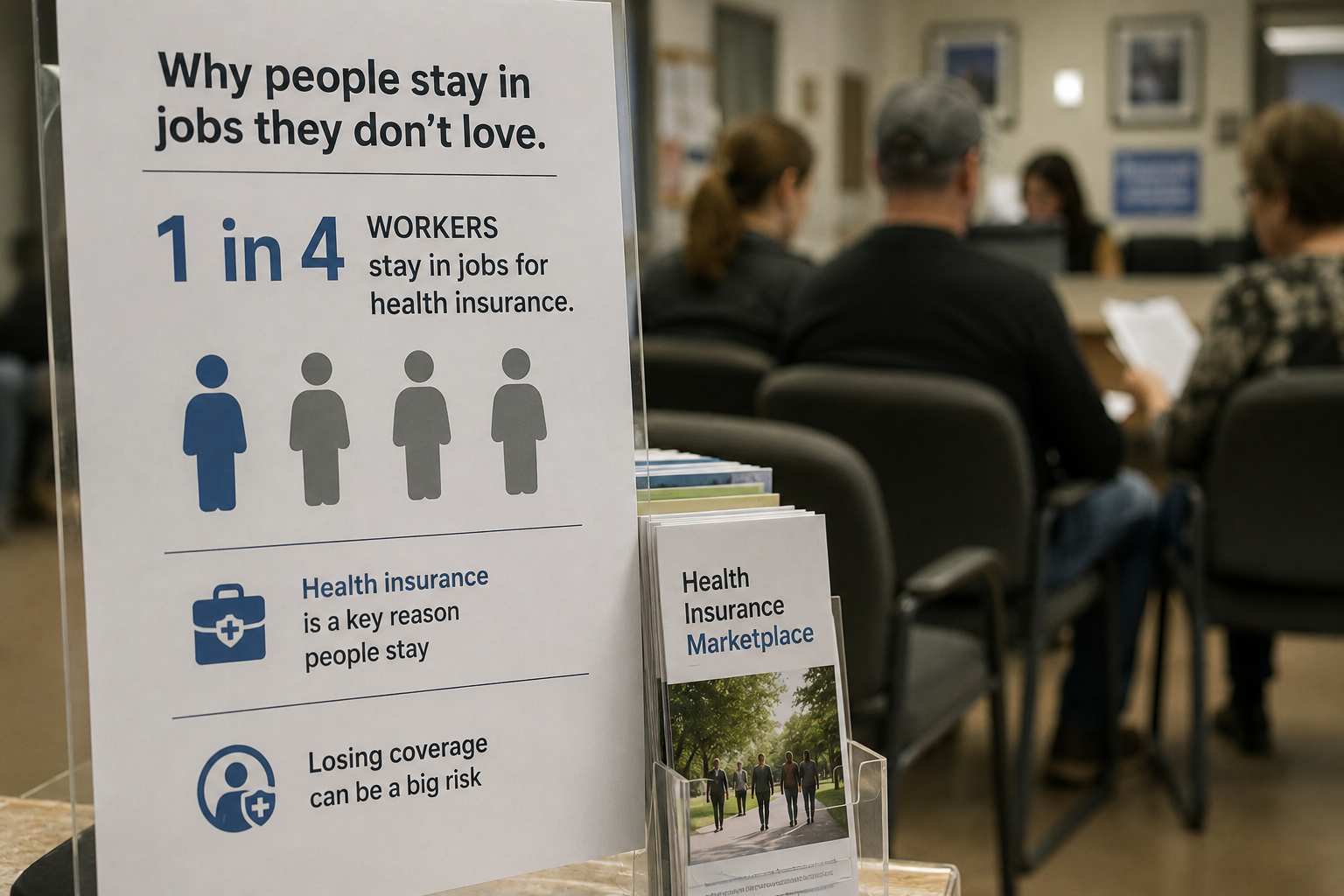
Nearly one in four U.S. workers, about 23 million people, say they’re staying in a job they want to leave just to keep their health insurance, according to a new survey from the West Health-Gallup Center on Healthcare in America. Researchers call this pattern job lock.
Key Facts
- 24% of U.S. workers report job lock, up from 16% in 2021, an eight-percentage-point increase.
- 44% of workers with medical debt report job lock, compared to 21% of those without medical debt.
- 41% of people with chronic health conditions say they’re staying in a job for insurance, compared to lower rates among healthier workers.
- Women report job lock at higher rates than men, 30% versus 20%.
- The survey was conducted from October to December 2025 with 5,660 U.S. adults.
Why This Matters Beyond Individual Workers
Job lock isn’t just a personal frustration. Researchers say it affects the broader economy by keeping workers out of jobs where they might be more productive, or out of starting their own businesses. Ellyn Maese, a research director at the West Health-Gallup Center, pointed to entrepreneurship specifically as one of the things job lock discourages, since striking out on your own usually means giving up employer-sponsored coverage.
Who’s Most Affected
The survey found job lock hits certain groups much harder than others. People managing medical debt, chronic illness, or recent healthcare-related borrowing were all significantly more likely to feel stuck. Researchers described middle-income workers as especially squeezed, since they often earn too much to qualify for government assistance but not enough to comfortably absorb the cost of buying insurance on their own.
What You Can Do If You’re Job Locked
If health insurance is the main thing keeping you in a job, it’s worth researching what coverage would actually cost you outside of an employer plan before assuming you can’t leave. The ACA marketplace at healthcare.gov lets you check subsidized plan costs based on your income, and some fields offer group coverage through professional associations or freelancer unions. If you’re managing a chronic condition, compare specific drug and specialist coverage carefully, since marketplace plans vary widely in what they cover, not just in price.
This article is for general information and is not financial or medical advice. Consider talking to a licensed insurance broker or financial advisor about your specific situation.
Sources
- Gallup — One in Four U.S. Employees Locked in Jobs for Health Insurance
- U.S. News — 1 in 4 Americans Stuck in Jobs for Health Insurance
Reviewed by the Wall Street Sights Personal Finance Desk.
Related reading: our guide to retirement healthcare costs looks at how these same coverage gaps affect people after they stop working.

Gulraj Ansari covers personal finance for Wall Street Sights, including retirement planning, credit, and everyday money decisions for U.S. readers.