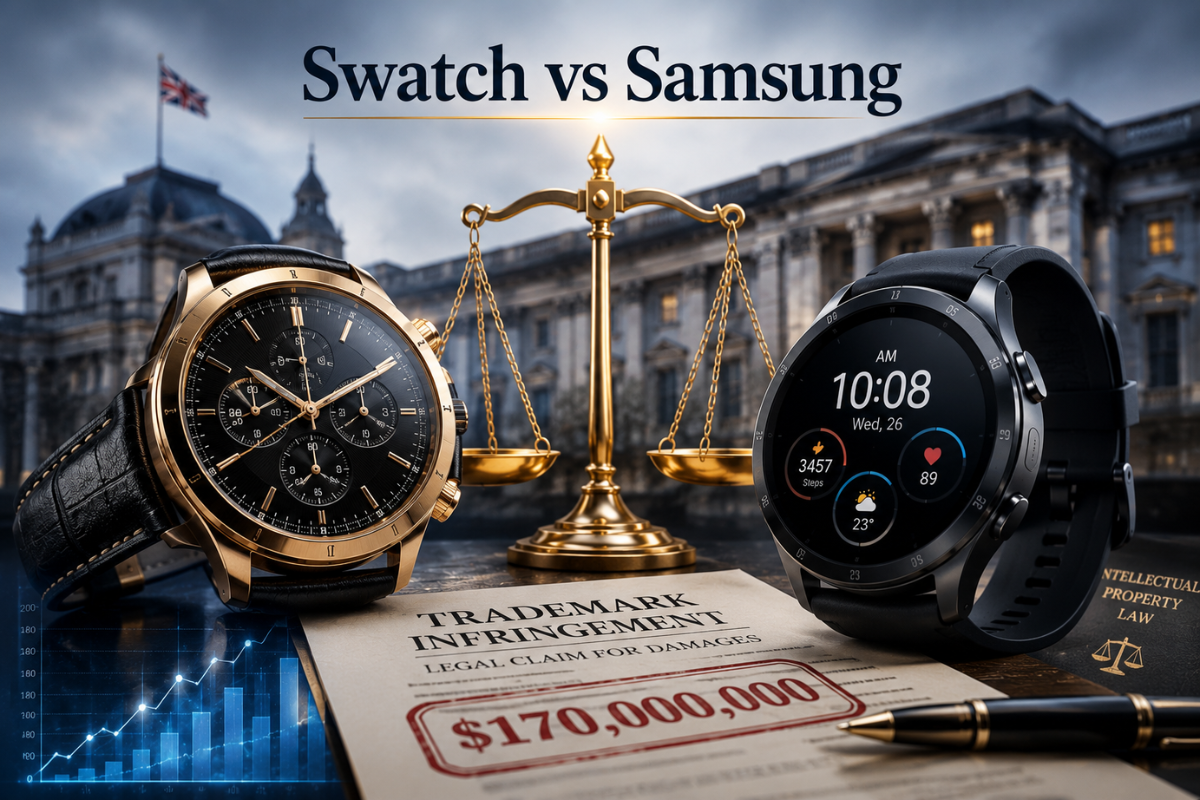
Swatch Group is asking a UK court to award $170 million in damages after Samsung was found liable for trademark infringement related to smartwatch watch-face apps that copied designs from several famous Swiss watch brands.
The court has already ruled that Samsung infringed Swatch’s trademarks. The current legal battle is focused on determining how much Samsung should pay and what the decision could mean for future digital products and luxury brand protection.
Key Takeaways
- Swatch is seeking $170 million in damages from Samsung.
- The lawsuit centers on smartwatch watch-face apps that allegedly copied luxury Swiss watch designs.
- A UK court previously ruled that Samsung was liable for trademark infringement.
- Samsung argues the watch-face apps were created by independent third-party developers and generated limited revenue.
- The final damages decision could influence future trademark disputes involving smartwatches, digital products, and app marketplaces.
- The case highlights the growing conflict between luxury fashion brands and the rapidly expanding wearable technology industry.
Luxury watchmaker Swatch Group is asking a UK court to order Samsung to pay $170 million in damages in one of the most closely watched trademark disputes involving smartwatches.
The lawsuit has attracted global attention because it sits at the crossroads of two fast-growing industries: luxury Swiss watches and wearable technology. As millions of consumers customize their smartwatches with digital watch faces, the case raises an important legal question—where does inspiration end and trademark infringement begin?
At the center of the dispute are downloadable watch-face applications that were available through Samsung’s smartwatch ecosystem. According to Swatch, several of these digital designs closely resembled iconic watch faces belonging to some of the company’s best-known brands, including Omega, Tissot, Longines, Hamilton, Blancpain, Breguet, Mido, and Swatch.
Swatch argues that these designs were not simple artistic similarities. Instead, the company says they copied protected trademarks that represent decades of craftsmanship, investment, and global brand recognition.
The legal battle has been developing for several years. Swatch first filed its claim after identifying hundreds of digital watch faces that it believed infringed its intellectual property rights. Although many of the watch-face apps were later removed from Samsung’s online marketplace, Swatch argued that the damage had already been done.
A UK court previously agreed that Samsung was liable for trademark infringement. Now, both companies have returned to court for the next stage of the case, where judges must determine how much compensation Samsung should pay.
Swatch believes the appropriate figure is $170 million. The company says this amount reflects the commercial value of licensing famous luxury watch designs across multiple premium brands. From Swatch’s perspective, allowing consumers to recreate luxury watches on mass-market smartwatches reduces the exclusivity that makes those brands valuable in the first place.
Samsung sees the issue very differently.
The technology giant argues that the disputed watch faces were largely created by independent third-party developers rather than Samsung itself. The company also maintains that the apps generated only modest revenue and that the damages requested by Swatch are far greater than any realistic financial impact.
Even so, the court has already found Samsung responsible because the applications were distributed through Samsung’s own digital platform. That finding has made this case particularly important for technology companies that operate app stores or digital marketplaces.
Legal experts say the outcome could extend well beyond Samsung and Swatch. Many smartwatch platforms allow developers to create customized watch faces, making intellectual property enforcement increasingly difficult. If courts continue to hold platform operators responsible for trademark violations by third-party developers, companies across the technology industry may need to strengthen how they review and approve digital content before it reaches consumers.
The dispute also reflects changing consumer habits. Traditional Swiss watches have long been viewed as symbols of craftsmanship, status, and heritage. Smartwatches, however, have introduced a new level of personalization, allowing users to switch between thousands of digital designs within seconds.
That flexibility has created new opportunities for developers—but it has also opened the door to legal disputes over famous designs and protected trademarks.
For luxury brands, the case is about more than protecting logos or product designs. It is about preserving brand identity in an increasingly digital world, where a recognizable watch face can become just another downloadable graphic.
As the damages hearing continues, businesses across the luxury, fashion, and technology sectors will be watching closely. The court’s final decision could help define how trademark laws apply to digital products for years to come, potentially setting a new benchmark for smartwatch platforms, app developers, and global consumer brands alike.
Timeline of the Swatch vs. Samsung Trademark Dispute
| Year | What Happened |
|---|---|
| 2019 | Swatch Group filed a trademark infringement lawsuit in the UK, alleging Samsung’s smartwatch ecosystem offered watch-face apps that copied luxury watch designs. |
| 2019–2020 | Samsung removed muny of the disputed watch-face apps after concerns were raised, but the legal case continued. |
| 2022 | The UK High Court ruled that Samsung was liable for trademark infringement involving several Swatch-owned brands. |
| 2023–2025 | Appeals and legal proceedings continued as both sides disputed the financial consequences of the ruling. |
| June 2026 | Swatch asked the UK court to award approximately $170 million in damages. The court is now deciding the final compensation amount. |
Swatch vs. Samsung: How the Two Companies View the Case
| Topic | Swatch’s Position | Samsung’s Position |
|---|---|---|
| Main Claim | Samsung’s smartwatch watch-face apps copied protected luxury watch designs. | The apps were largely created by independent third-party developers. |
| Trademark Rights | Famous watch faces are valuable trademarks that deserve strong legal protection. | Samsung believes the damages claim is far larger than any actual harm. |
| Financial Impact | Unauthorized digital copies reduce exclusivity and weaken luxury brands. | The apps generated relatively little revenue and should not justify such a large damages award. |
| Platform Responsibility | Samsung is responsible because the apps were distributed through its ecosystem. | Samsung argues platform responsibility should be limited where third-party developers created the content. |
| Damages Requested | Approximately $170 million. | Samsung says the amount is excessive and unrealistic. |
Why This Lawsuit Matters Beyond Two Companies
At first glance, the dispute may look like another trademark lawsuit between two global corporations. In reality, the outcome could influence how digital products are created and distributed across the technology industry.
Smartwatches have become one of the world’s fastest-growing consumer electronics categories. Millions of users customize their devices with downloadable watch faces every year. Those digital designs often imitate classic luxury watches because consumers enjoy the appearance without buying the original product.
Luxury watch companies see the situation differently.
For brands such as Omega, Longines, Blancpain, and Tissot, every detail of a watch face represents years of design work, engineering, and brand recognition. These visual elements help customers instantly identify a product. Swatch argues that allowing similar digital versions to circulate freely weakens the value of those trademarks.
The case also raises important questions about the role of technology platforms. Should a platform operator be responsible when independent developers upload content that infringes intellectual property? Or should liability remain with the individual developer?
The court’s final decision could influence how app marketplaces review digital products before they become available to consumers.
What This Means for Investors
Investors are watching the case for several reasons.
1. Financial Risk
Although Samsung is one of the world’s largest technology companies, a damages award approaching $170 million would still represent a significant legal expense. More importantly, it could encourage similar claims from other luxury brands.
2. Platform Liability
Technology companies increasingly operate marketplaces where third-party developers sell software, themes, digital artwork, and customization tools.
If courts place greater responsibility on platform owners, companies may face higher compliance costs and stricter review procedures.
3. Luxury Brand Protection
For Swatch Group, the lawsuit demonstrates its willingness to defend valuable intellectual property.
Many investors see aggressive trademark enforcement as a positive sign because luxury companies rely heavily on brand reputation rather than production volume.
4. Future Licensing Opportunities
The case could also encourage more official partnerships between luxury watchmakers and smartwatch manufacturers.
Instead of legal disputes, companies may choose licensing agreements that allow premium watch designs to appear on smartwatches while generating revenue for both sides.
What This Means for Consumers
Most smartwatch users simply want attractive watch faces.
However, this lawsuit could affect the choices available in the future.
If Samsung and other platforms introduce stricter approval processes, users may notice:
- Fewer unofficial luxury-inspired watch faces.
- More licensed premium designs.
- Improved quality standards for downloadable watch-face apps.
- Better protection against counterfeit digital products.
Consumers could also see more collaborations between traditional watchmakers and technology companies, offering authentic digital versions of luxury watches instead of unofficial copies.
Expert Analysis: A Turning Point for Digital Intellectual Property
The Swatch-Samsung dispute reflects a much larger trend in today’s digital economy.
In the past, trademark disputes usually involved physical products such as watches, clothing, handbags, or electronics.
Today, valuable intellectual property increasingly exists in digital form.
A smartwatch display may be only a few centimeters wide, but it can still reproduce recognizable brand elements protected under trademark law.
Courts around the world are gradually adapting traditional intellectual property rules to digital products.
If Swatch receives damages close to its requested amount, companies that operate app stores, online marketplaces, gaming platforms, and digital content services may adopt much stricter review systems.
That could reduce future legal risks but also make it harder for independent developers to publish creative designs without extensive approval.
Regardless of the final damages award, this lawsuit is likely to become an important reference point for future cases involving digital branding, wearable technology, and intellectual property rights.
As wearable devices continue to evolve, courts will increasingly face similar questions about where creativity ends and trademark infringement begins.
Frequently Asked Questions
Why is Swatch suing Samsung?
Swatch claims that digital watch-face apps available through Samsung’s smartwatch ecosystem copied the trademark-protected designs of several Swatch-owned luxury watch brands without permission. The company argues that these digital copies reduced the exclusivity and commercial value of its brands.
How much money is Swatch seeking?
Swatch is asking the UK court to award approximately $170 million in damages. The amount is based on what Swatch says would have been a fair licensing fee for using the designs of multiple luxury watch brands.
Has Samsung already been found liable?
Yes. A UK court previously ruled that Samsung was liable for trademark infringement. The current court proceedings are focused on determining the amount of financial compensation Samsung should pay.
Which luxury watch brands are involved?
The lawsuit involves several Swatch Group brands, including:
Omega
Tissot
Longines
Blancpain
Hamilton
Mido
Breguet
Swatch
These brands are known for their distinctive watch-face designs and trademarks.
What is Samsung’s defense?
Samsung argues that most of the disputed watch-face apps were created by independent third-party developers. The company also says the apps generated only limited revenue and that Swatch’s damages claim is much higher than any actual financial impact.
Why is this lawsuit important?
The case could influence how technology companies manage third-party digital content. A significant damages award may encourage stricter review processes for smartwatch apps, themes, and other digital products that use recognizable brand designs.
Could this affect smartwatch users?
Possibly. Smartwatch platforms may remove more unofficial luxury-style watch faces or require developers to obtain licenses before publishing similar designs. Users may also see more officially licensed watch faces in the future.
When will the court decide the damages?
The damages hearing is ongoing. The court has not yet announced a final decision on the amount Samsung may have to pay.
Source : Reuters

Senior Markets Correspondent
Sarah specializes in U.S. and global stock markets, corporate earnings, and macroeconomic trends. With over a decade of experience covering Wall Street and international exchanges, she breaks down complex financial news into actionable insights for everyday readers.