Quick Answer
Supreme Court Justice Clarence Thomas rejected former Alabama Chief Justice Roy Moore’s emergency request to preserve an $8.2 million defamation award. The case comes from a 2017 Senate campaign ad run against Moore by Senate Majority PAC. A jury had awarded Moore damages in 2022, but a federal appeals court later threw out the verdict.
Supreme Court Turns Away Moore’s Emergency Request
The U.S. Supreme Court on Monday rejected an emergency request from former Alabama Chief Justice Roy Moore in a defamation case connected to his controversial 2017 U.S. Senate campaign.
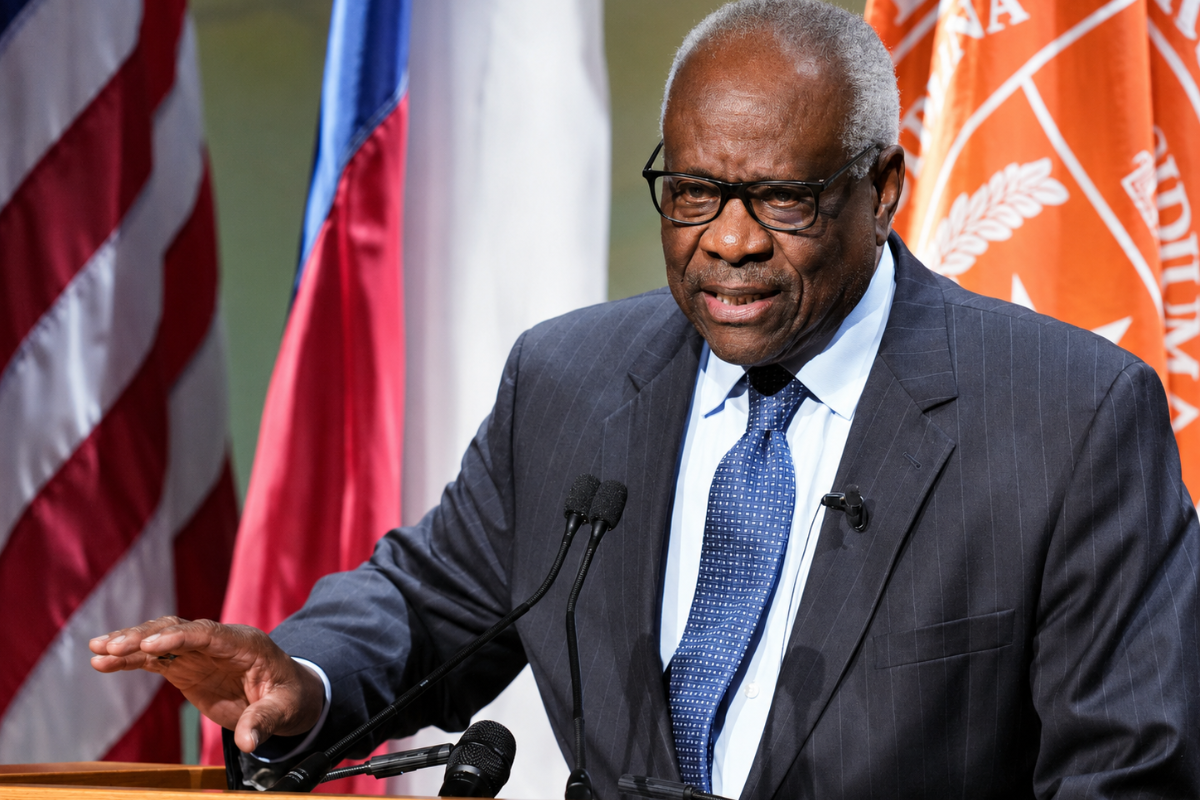
Justice Clarence Thomas denied Moore’s request to keep alive an $8.2 million defamation verdict against Senate Majority PAC. Thomas handles emergency matters from the 11th Circuit, where Moore’s case was heard.
Thomas did not provide a written explanation for the denial.
The decision is a setback for Moore, but it may not be the final step in the case. Moore’s lawyers still plan to ask the Supreme Court for a fuller review on the merits of the dispute.
What the Case Is About
The legal fight centers on a television ad aired during Moore’s 2017 campaign for the U.S. Senate in Alabama.
The ad was run by Senate Majority PAC, a Democratic-aligned political group. It referred to allegations about Moore’s past conduct with young women and girls decades earlier, when Moore was a prosecutor in Etowah County.
The ad claimed Moore had been barred from a shopping mall “for soliciting sex from young girls” and had approached a girl who “was 14 and working as Santa’s helper.”
Moore denied the allegations and sued for defamation. His lawyers argued that the ad wrongly combined separate reports in a way that created a false and damaging accusation.
Jury Awarded Moore $8.2 Million
In 2022, a federal jury sided with Moore and awarded him $8.2 million in damages.
The jury found that Senate Majority PAC had defamed Moore through the campaign ad. For Moore, the verdict was a major legal win after years of public controversy linked to the 2017 Senate race.
But that victory did not last.
In April, the U.S. Court of Appeals for the 11th Circuit overturned the verdict. The appeals court ruled that Moore had not shown clear and convincing evidence that the ad was published with “actual malice.”
That standard is important in defamation cases involving public figures.
Why “Actual Malice” Matters
Because Moore was a public figure, he had to meet a higher legal standard to win a defamation case.
Under the 1964 Supreme Court decision New York Times v. Sullivan, public figures must prove that a false statement was made with actual malice. That means the speaker either knew the statement was false or acted with reckless disregard for whether it was true.
The 11th Circuit said Moore failed to meet that standard.
That ruling wiped out the $8.2 million award and led Moore to seek emergency relief from the Supreme Court.
Moore’s Lawyers Say the Ad Created a False Message
Moore’s attorneys argued that the campaign ad did more than repeat past reports. They said the ad joined different claims together through editing, timing, wording, and visuals.
According to Moore’s legal team, the ad made it appear that Moore had solicited sex from a 14-year-old Santa’s helper and had been banned from a mall for that same conduct.
Moore’s lawyers said that was not what any original source had actually reported.
In their filing, they argued that the ad took separate pieces and presented them as one false charge.
The Ad Ran More Than 500 Times
The Senate Majority PAC ad aired more than 500 times during the 2017 campaign.
That race became one of the most closely watched Senate elections in the country. Moore, a Republican, eventually lost to Democrat Doug Jones.
The campaign was shaped by allegations about Moore’s conduct decades earlier, which he denied. Those claims became a major issue in the race and drew national attention.
What Thomas’ Decision Means
Justice Thomas’ denial means the lower court ruling can remain in effect for now.
Moore had asked the Supreme Court to block the appeals court decision while the justices considered whether to take up the case. Thomas rejected that emergency request without giving legal reasoning.
That does not necessarily mean the Supreme Court will never consider the case. Moore’s lawyers can still file a regular petition asking the full Court to review the 11th Circuit’s decision.
But emergency relief is difficult to obtain, and Thomas’ decision keeps the appeals court defeat in place.
Related Defamation Fight Also Ended Without Moore Victory
Moore has been involved in other defamation litigation connected to the allegations from the 2017 campaign.
In a separate case decided four years ago, Moore and Leah Corfman sued each other for defamation. Corfman was one of the women who accused Moore of sexual abuse.
After an eight-day trial in 2022, a Montgomery County jury found that Corfman did not defame Moore with her allegations. The jury also found that Moore did not defame Corfman through his public denials.
That case ended without either side winning damages against the other.
Why This Case Matters
The case is important because it sits at the center of politics, campaign speech, and defamation law.
Campaign ads are often aggressive, especially in high-profile races. But defamation law still places limits on false statements that damage a person’s reputation.
At the same time, public figures face a high legal bar when they sue over speech. The actual malice standard is designed to protect strong debate about public issues, even when that debate is harsh.
Moore’s case shows how difficult it can be for public figures to win defamation claims, even after a jury awards damages.
Final Takeaway
Roy Moore won an $8.2 million defamation verdict in 2022, but the 11th Circuit later threw it out. Justice Clarence Thomas has now rejected Moore’s emergency request to keep that award alive while the Supreme Court considers a possible appeal.
Moore’s legal team says the campaign ad created a false accusation by combining separate reports. The appeals court said Moore did not prove actual malice under the legal standard for public figures.
For now, the $8.2 million verdict remains blocked, and Moore must wait to see whether the full Supreme Court will agree to hear the case.
FAQ
Who is Roy Moore?
Roy Moore is a former Alabama chief justice who ran for the U.S. Senate in 2017.
What did Clarence Thomas do in Roy Moore’s case?
Justice Clarence Thomas denied Moore’s emergency request related to an $8.2 million defamation verdict.
What was the defamation case about?
The case involved a 2017 Senate campaign ad by Senate Majority PAC that Moore said falsely accused him of misconduct involving young girls.
How much money did the jury award Roy Moore?
A federal jury awarded Moore $8.2 million in 2022.
Why was the verdict thrown out?
The 11th Circuit ruled that Moore did not prove by clear and convincing evidence that the ad was published with actual malice.
What is actual malice?
Actual malice means a statement was made knowing it was false or with reckless disregard for whether it was true.
Can Moore still appeal?
Yes. Moore’s lawyers plan to ask the Supreme Court for a fuller ruling on the merits of the case.

James Carter covers international news and geopolitics for Wall Street Sights, with a focus on how global events affect markets, trade, and the U.S. economy.