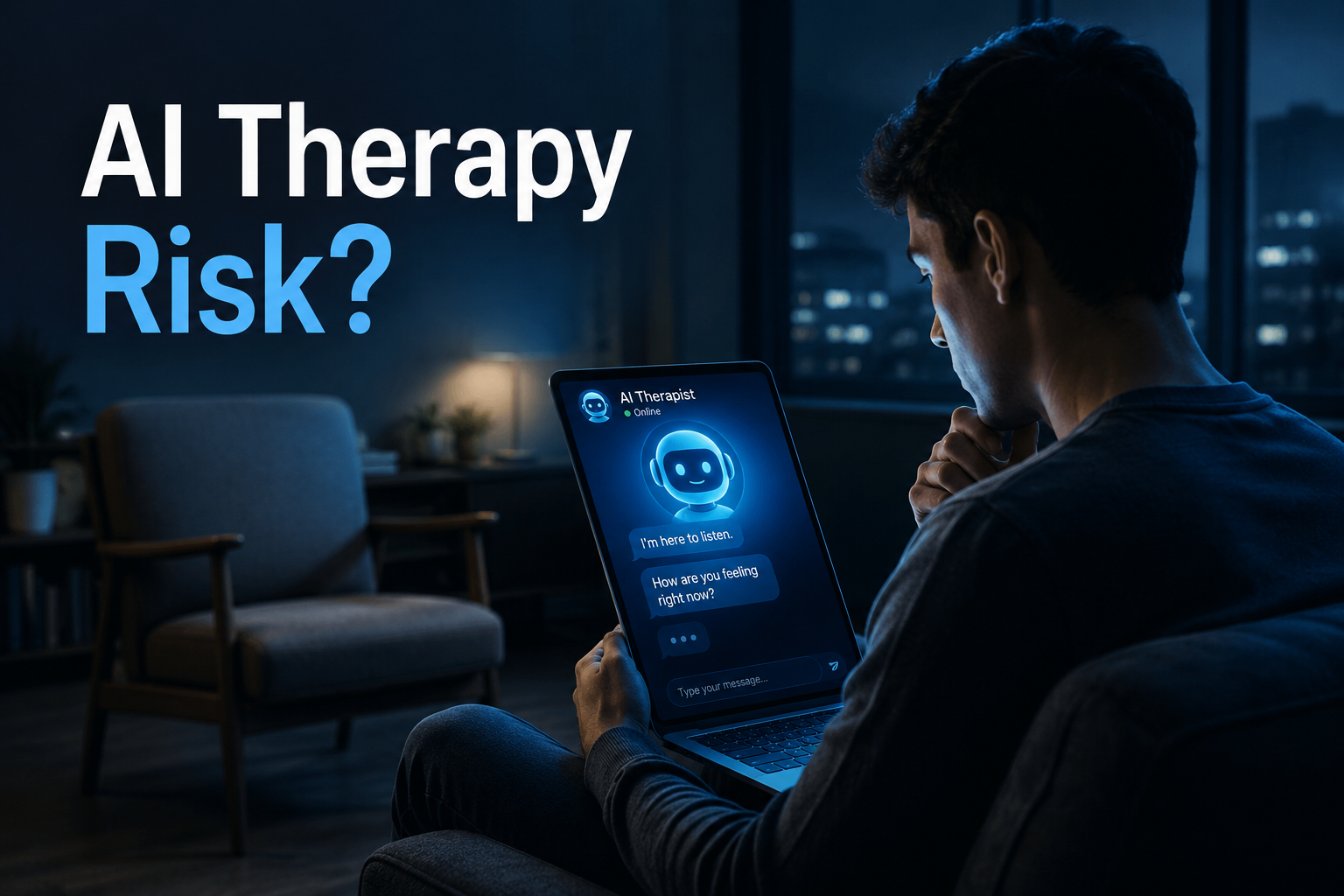
AI therapy chatbots are becoming popular because they are cheap, private, and available at any time. Some users say these tools help them organize thoughts, calm anxiety, or reflect between therapy sessions. But experts warn that chatbots should not replace licensed therapists because the science is still limited, safety risks remain real, and many tools are not regulated like medical treatment.
AI Is Moving Into the Therapy Room
AI chatbots are no longer being used only for homework, emails, or coding. Many people now use them for emotional support, stress, anxiety, relationship problems, and even serious mental-health conversations.
Some users say chatbots feel easier to talk to than people. They do not judge. They answer instantly. They are often cheaper than therapy. For people who cannot afford regular sessions or cannot find a therapist quickly, that can feel like a lifeline.
This is why mental-health-focused chatbots and wellness apps are growing fast. Some are designed to act like digital companions. Others offer breathing exercises, journaling prompts, emotional check-ins, or therapist-like conversations.
But the big question is simple: should these chatbots replace real therapists?
Many mental-health experts say the answer is no.
Why People Are Turning to Chatbots
The demand is easy to understand. Therapy is expensive in the United States. Many people wait weeks or months for an appointment. Some cannot find a therapist who accepts their insurance. Others feel embarrassed talking to a human about painful thoughts.
A chatbot solves some of those problems. It is available at 2 a.m. It does not cancel appointments. It can answer in seconds. It may feel private and safe, especially for young people who already spend much of their lives online.
Some users also say chatbots help between therapy sessions. They can write down thoughts, ask the bot to reframe a stressful situation, or use it as a journal that talks back.
Used this way, AI may be helpful as a support tool.
The danger begins when people start treating the chatbot as a full therapist.
What Experts Are Worried About
Therapy is not just talking. A trained therapist listens carefully, notices body language, asks difficult questions, understands risk, and knows when a person needs urgent help.
A chatbot does not truly understand pain, trauma, family history, body language, or silence. It predicts words. It can sound kind, but it does not have clinical judgment.
Experts are especially worried about chatbots that agree too much with users. A good therapist does not simply validate everything a person says. Sometimes therapy requires gentle challenge. It may involve helping someone question harmful thoughts or unsafe beliefs.
AI systems can be too agreeable. They may support a user’s view even when that view is unhealthy. In serious cases, this can make anxiety, obsession, delusional thinking, or emotional dependence worse.
That is why many psychologists say AI can be a tool, but it should not be the main source of care.
The Science Is Still Early
Research on mental-health chatbots is growing, and some results are promising. Studies have found that certain chatbot programs may reduce symptoms of depression or anxiety for some users.
But there is an important difference between a structured mental-health app and an open-ended chatbot acting like a therapist.
Many studies are short. Some involve small groups. Some test controlled programs, not the large general chatbots people use every day. Many tools have not been tested long enough to show whether they are safe over months or years.
This matters because mental health is not like ordering food or checking the weather. Bad advice can have serious consequences.
The strongest conclusion today is not that all AI mental-health tools are dangerous. It is that the evidence is not strong enough to say they can safely replace licensed therapists.
Regulation Is Still Catching Up
Another major issue is regulation.
Licensed therapists must follow professional rules. They need training, supervision, privacy standards, and legal responsibilities. If they act dangerously, they can lose their license.
Many AI chatbots do not face the same level of oversight. Some apps say they are for wellness, not medical treatment. That wording can help them avoid stricter regulation, even when users treat them like therapy.
Regulators are now paying closer attention. The FDA has discussed how AI-powered mental-health tools should be evaluated for safety and effectiveness. Lawmakers in some states are also looking at rules for AI in therapy.
But the market is moving faster than the rules.
That creates a risky gap. Millions of people may already be using tools that sound therapeutic before those tools have been fully tested.
Where AI May Still Help
AI does not have to be rejected completely.
There are useful roles for chatbots in mental health. They may help people track moods, prepare questions for therapy, learn basic coping skills, or find professional resources. They may also support people between sessions when used under human supervision.
For example, a therapist might ask a patient to use an app for journaling or breathing exercises. In that case, the AI is not replacing care. It is supporting care.
AI could also help with access. In areas with therapist shortages, digital tools may help people take a first step toward support. But the safest model is a human-in-the-loop model, where trained professionals remain involved.
The Risk for Teens and Vulnerable Users
Young people may be especially vulnerable to chatbot dependence. Teenagers can form strong emotional bonds with digital tools. If a chatbot gives constant praise, always agrees, or becomes a substitute for real relationships, it may affect how young users learn to handle conflict and stress.
People with severe depression, trauma, psychosis, addiction, or suicidal thoughts may also face higher risk. These situations need trained human care. A chatbot may miss warning signs or respond in a way that sounds caring but is not clinically safe.
That is why experts say people should not rely on AI chatbots during a crisis.
What Users Should Know
AI chatbots can feel supportive, but they are not therapists. They do not replace diagnosis, treatment, medication advice, crisis care, or long-term counseling.
Users should be careful with private information. Mental-health conversations can include deeply personal details. Before using any app, users should check privacy policies and understand how their data may be stored or used.
The safest approach is simple: use AI as a note-taking or reflection tool, not as your doctor or therapist.
Final Takeaway
AI therapy chatbots are growing because the mental-health system is hard to access. They are fast, cheap, and always available. For some people, they may offer comfort or basic support.
But comfort is not the same as clinical care.
The latest debate is not about whether AI can help mental health someday. It probably can. The real question is whether today’s chatbots are safe and proven enough to replace trained therapists.
Right now, the evidence says they are not.
AI may become part of mental-health care, but the human therapist still matters. Real healing often needs trust, judgment, challenge, privacy, and human connection. A chatbot can imitate some of that language, but it cannot fully replace the relationship behind real therapy.
Read more.
Wealthy Father’s Multi-Million-Dollar Football Dream Ends in Controversy
FAQ
Are AI chatbots replacing therapists?
Some people are using AI chatbots instead of therapy, but experts warn they should not replace licensed mental-health professionals.
Can AI therapy chatbots help with anxiety or depression?
Some structured chatbot tools have shown small benefits in studies, but evidence is still limited and does not prove that chatbots can replace therapy.
Why are experts worried about AI therapy chatbots?
Experts worry about wrong advice, weak crisis handling, privacy risks, emotional dependence, and chatbots that agree with harmful thoughts.
Are AI therapy apps regulated by the FDA?
Some digital mental-health tools may fall under medical-device rules, but many wellness-style chatbots are not regulated like traditional therapy or prescription treatment.
Can I use a chatbot between therapy sessions?
A chatbot may help with journaling or basic reflection, but it should be used as a support tool, not as a replacement for a therapist.
What should someone do in a mental-health crisis?
They should seek immediate human help through local emergency services, a trusted person, or a licensed crisis-support service.
Source : wsj.com

Gulraj Ansari covers personal finance for Wall Street Sights, including retirement planning, credit, and everyday money decisions for U.S. readers.