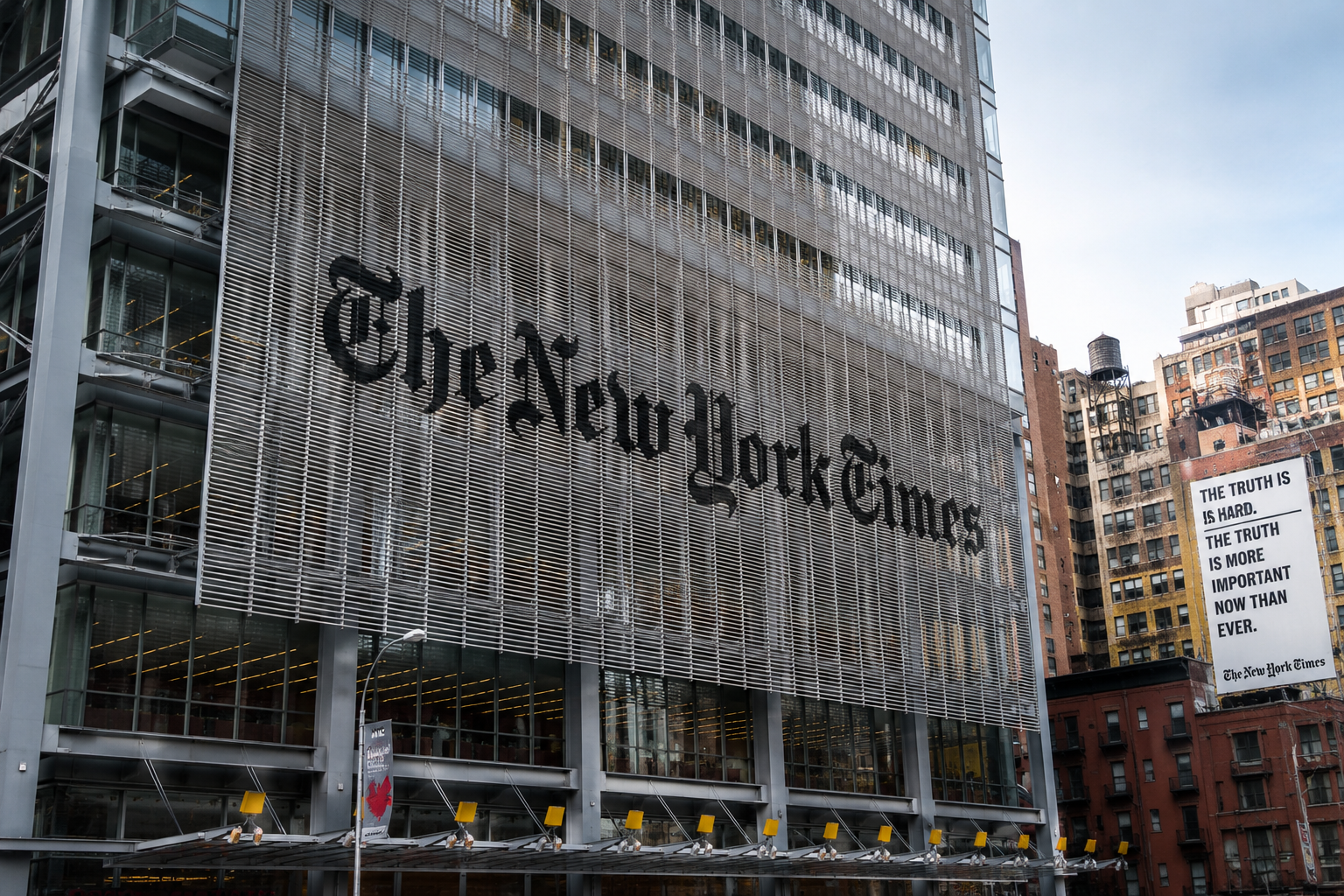
The New York Times argued in court this week that the White House used the justice system to intimidate its reporters, after federal agents showed up at journalists’ homes with subpoenas following a story that angered President Trump.
Published July 25, 2026 · 5 min read · Wall Street Sights U.S. Desk
Key Facts
- The dispute traces back to a July 8 Times story reporting that Trump flew home from a NATO summit in Turkey on an older Air Force One jet due to Secret Service security concerns.
- On the night of Friday, July 10, just two days after the story ran, FBI agents went to several reporters’ homes with subpoenas compelling grand jury testimony.
- The Times says the FBI also sought phone records for five reporters, two of their spouses, and one reporter’s mother, without telling the Times first.
- The Times’ legal team, led by attorney David A. O’Neil, argues the government violated its own policy of treating subpoenas against reporters as a last resort, not a first move.
- The case was argued in court on Thursday, July 23.
Why Subpoenas to Reporters Are Usually a Last Resort
The Justice Department has long had internal rules limiting when investigators can force journalists to testify or hand over materials, since doing so can expose confidential sources and discourage future reporting. Under normal practice, subpoenas go to a news organization’s lawyers first, giving the outlet a chance to fight the request in court before any material changes hands. The Times says that didn’t happen here, and that agents went directly to reporters’ homes instead.
What the White House Says
An official involved in the case said the Justice Department tried to limit intrusion into the free press as much as possible, and said the administration respects First Amendment protections for journalists. The Times disputes that characterization, calling the government’s actions a violation of basic newsgathering protections.
Why This Case Matters
Cases like this test how far the government can go when investigating leaks to reporters without violating press freedom protections. A ruling in the Times’ favor could reinforce limits on how aggressively federal agents can pursue journalists’ sources. A ruling for the government could make it easier for federal investigators to compel reporters and their family members to testify in future leak investigations, a precedent that press freedom groups are watching closely.
This is a developing legal story. Wall Street Sights will update this article as the court proceedings continue.
Sources
Reviewed by the Wall Street Sights U.S. Desk.

Senior Markets Correspondent
Sarah specializes in U.S. and global stock markets, corporate earnings, and macroeconomic trends. With over a decade of experience covering Wall Street and international exchanges, she breaks down complex financial news into actionable insights for everyday readers.