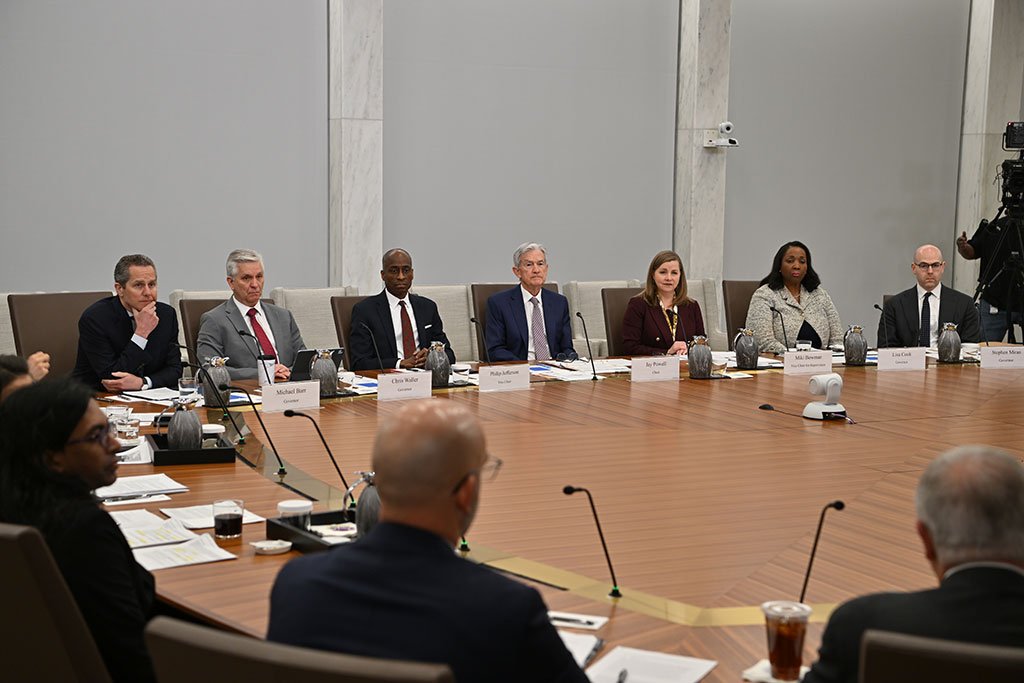
The Federal Reserve meets on July 28 and 29 to decide whether to raise, cut, or hold interest rates. The decision comes out at 2:00 p.m. ET on July 29, followed by a press conference from Fed Chair Kevin Warsh at 2:30 p.m.
Published July 25, 2026 · 4 min read · Wall Street Sights Markets Desk
Key Facts
- The federal funds rate is currently set at 3.50% to 3.75%.
- Most economists surveyed by FactSet expect the Fed to hold rates steady, which would be the fifth straight meeting without a change.
- Some traders see about a one-in-three chance of a rate hike, mainly because energy prices have risen sharply this month.
- Fed Governor Lisa Cook has pointed to inflation running at 3.7%, well above the Fed’s 2% target.
- This meeting will not include the Fed’s economic projections or “dot plot,” which only come out four times a year.
What the Fed Actually Does
The federal funds rate is the interest rate banks charge each other for short-term loans. It sounds technical, but it affects almost everything tied to borrowing money: credit card rates, car loans, mortgage rates and savings account yields. When the Fed raises this rate, borrowing gets more expensive. When it cuts the rate, borrowing gets cheaper.
Why Rates Might Not Move This Time
The Fed has held rates steady at every meeting since Kevin Warsh took over as chair in May 2026. Growth has stayed solid and unemployment has stayed low, which gives the Fed room to wait rather than act quickly. Warsh has also said he plans to share less “forward guidance” than past Fed chairs, meaning the press conference may not offer many hints about future moves.
Why Some Traders Expect a Hike Anyway
Oil prices climbed for most of July, briefly passing $100 a barrel, as conflict in the Middle East disrupted shipping routes. Higher energy prices tend to push inflation higher, since fuel costs show up in the price of almost everything else. That’s why a small but real share of traders are betting the Fed could raise rates a quarter of a point instead of holding steady.
What This Means for Your Money
A rate hold keeps things mostly unchanged: credit card and loan rates stay roughly where they are, and high-yield savings accounts keep paying similar returns. A surprise rate hike would likely push borrowing costs up further and could pressure stock prices, especially for growth stocks that are sensitive to interest rates. A rate cut, which almost no one expects this time, would do the opposite.
Financial advisors generally suggest not making major money moves based on a single Fed meeting. If you have a variable-rate loan or are shopping for a mortgage, it’s still worth watching this decision, since even a hold can affect how lenders price new loans in the weeks after.
This is general information, not personalized financial advice. Talk to a licensed financial advisor about how interest rate changes affect your specific situation.
Sources
- CBS News — What experts predict for the Fed’s July meeting
- Forbes — Markets price in rising odds of a July Fed rate hike
- Federal Reserve — June 2026 FOMC Minutes
Reviewed by the Wall Street Sights Markets Desk.
Related reading: our Nasdaq selloff coverage looks at how rising oil prices are already shaking up markets ahead of this meeting. For the fundamentals behind how the Fed works, see our Complete Federal Reserve Guide.

Senior Markets Correspondent
Sarah specializes in U.S. and global stock markets, corporate earnings, and macroeconomic trends. With over a decade of experience covering Wall Street and international exchanges, she breaks down complex financial news into actionable insights for everyday readers.