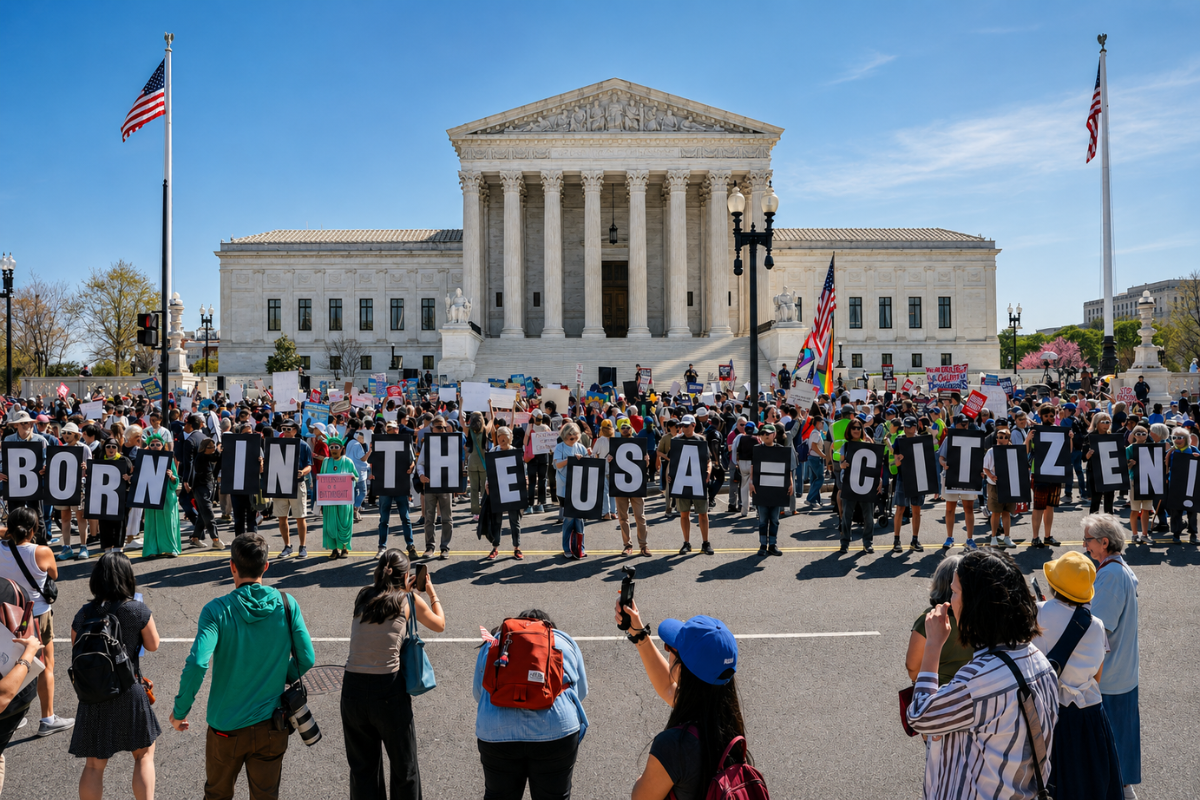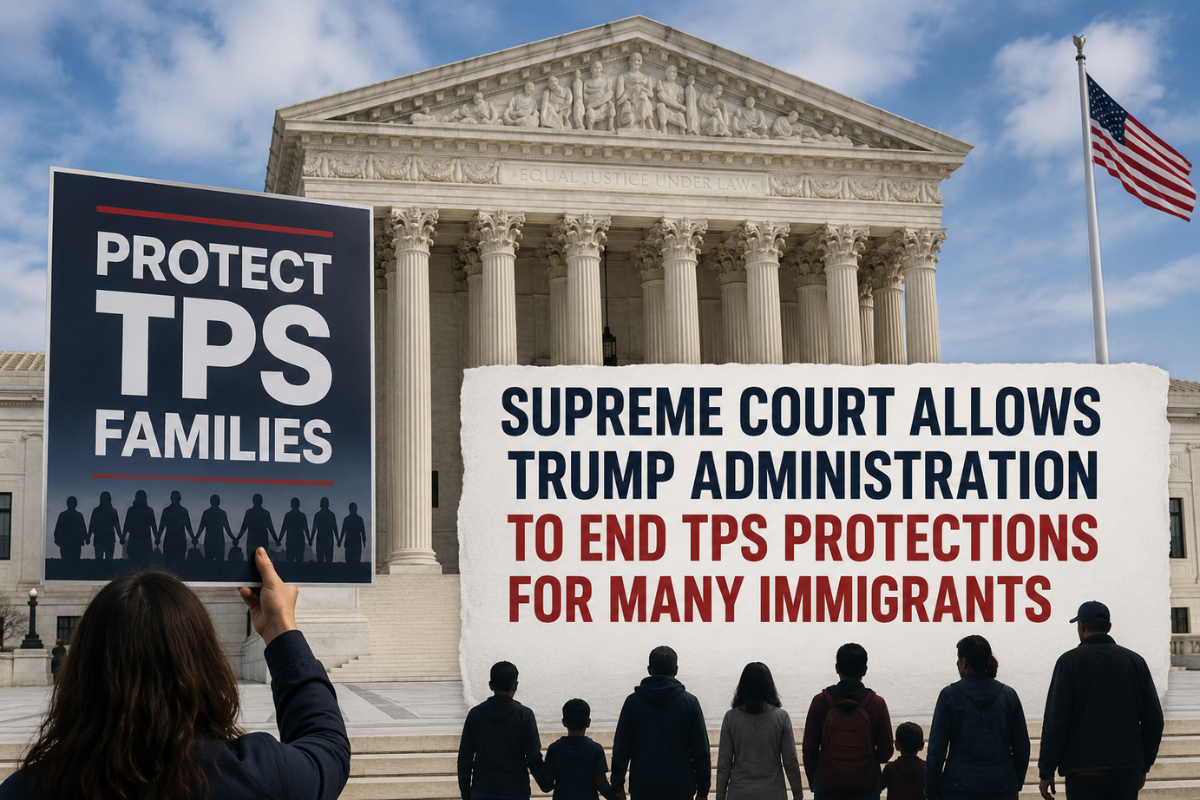
The U.S. Supreme Court ruled on Thursday that the Trump administration can remove humanitarian protections previously granted to many immigrants living in the United States under the Temporary Protected Status (TPS) program.
The 6-3 decision gives the executive branch broad authority over TPS designations and says that courts generally cannot second-guess those decisions. As a result, the administration may move ahead with ending protections for hundreds of thousands of people who had been allowed to live and work legally in the country.
What Is Temporary Protected Status (TPS)?
Temporary Protected Status, commonly known as TPS, is a humanitarian immigration program created by Congress in 1990.
The program allows eligible people from certain countries to stay and work legally in the United States when returning home would be unsafe because of conditions such as:
- Armed conflict or war
- Natural disasters
- Serious epidemics
- Other extraordinary or temporary crises
TPS does not automatically provide permanent residency or U.S. citizenship. Instead, it offers temporary legal protection that can be renewed when conditions remain dangerous.
Why Did the Supreme Court Rule This Way?
Writing for the Court’s majority, Justice Samuel Alito said that decisions about granting or ending TPS fall largely within the authority of the Secretary of Homeland Security.
According to the ruling, these policy decisions are generally not subject to judicial review, meaning federal courts have only limited power to intervene when the executive branch changes TPS designations.
The majority also rejected claims that the administration’s actions toward Haiti were motivated by racial prejudice, concluding that the cited statements could be interpreted as policy positions rather than evidence of unlawful discrimination.
Strong Dissent From Three Justices
Justice Elena Kagan disagreed with the majority’s reasoning and wrote a dissent joined by Justices Sonia Sotomayor and Ketanji Brown Jackson.
The dissent argued that past public statements about Haitian immigrants should have been taken more seriously when evaluating whether bias influenced government policy. Kagan criticized the majority for not fully addressing those concerns.
Who Is Affected by the Decision?
The ruling directly impacts approximately:
- Around 350,000 TPS holders from Haiti
- About 6,000 TPS holders from Syria
The decision may also make it easier for the administration to end TPS protections for people from additional countries, including Afghanistan, Nepal, South Sudan, and Venezuela.
When President Trump returned to office, roughly 1.3 million immigrants from 17 countries were living in the United States under TPS. The administration has sought to terminate protections for many of those countries.
Could Some Immigrants Stay in the U.S. Through Other Programs?
Possibly.
Some individuals losing TPS may qualify for other forms of immigration relief, such as asylum or different legal protections. However, immigration experts note that these alternatives often have stricter requirements and may not be available to everyone currently protected under TPS.
For many beneficiaries, losing TPS could significantly increase the risk of deportation if no other legal pathway applies.
Supporters and Critics Offer Different Views
Supporters of TPS say beneficiaries are generally law-abiding residents who undergo background checks, contribute to the economy, and often have close family members who are U.S. citizens. Many have lived and worked in the United States for years.
Critics argue that TPS was intended as a temporary measure and has sometimes been extended repeatedly beyond its original purpose. They support ending protections when government officials determine that conditions in the affected countries have improved enough for people to return safely.
The Supreme Court’s ruling marks an important development in U.S. immigration policy by giving the executive branch broad authority over Temporary Protected Status decisions. While the judgment immediately affects hundreds of thousands of TPS beneficiaries from Haiti and Syria, its broader impact could extend to immigrants from several other countries in the months ahead.
As legal and administrative changes continue, many affected families may need to explore alternative immigration options or prepare for significant changes to their legal status in the United States.
Read more
How the Latest Supreme Court Decision Could Affect Green Card Holders Across the U.S.
China’s Gaokao 2026: Why 12.9 Million Students Took the World’s Toughest Exam
What does the Supreme Court decision mean?
The ruling allows the Trump administration to proceed with ending TPS protections for certain groups of immigrants and limits the ability of courts to block those decisions.
Did the Supreme Court rule on TPS?
No. Temporary Protected Status is a temporary humanitarian benefit that allows eligible individuals to live and work legally in the United States but does not automatically lead to permanent resident status or citizenship.
Source : scotusblog.com

Sarah Mitchell covers U.S. and global stock markets for Wall Street Sights, focusing on how earnings, Federal Reserve policy, and macroeconomic events move major indexes.