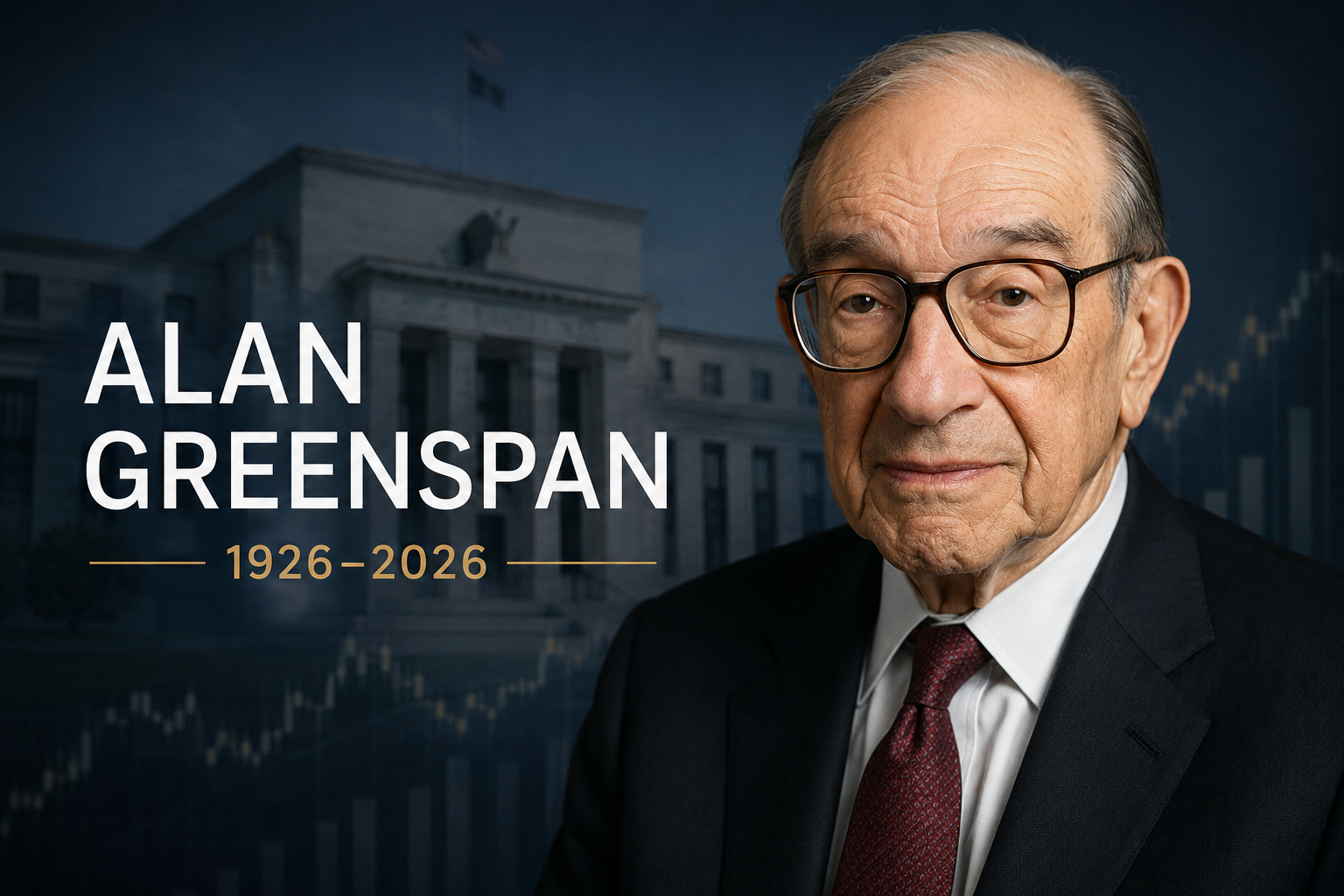
Former Federal Reserve Chairman Alan Greenspan has died at the age of 100. Explore his career, major decisions, economic legacy, criticism, and lasting influence on global markets.
Table of Contents
Alan Greenspan Dies at 100, Leaving Behind a Complex Economic Legacy
Former U.S. Federal Reserve Chairman Alan Greenspan has died at the age of 100, closing the chapter on one of the most influential careers in modern economic history. He led the Federal Reserve for nearly two decades and became one of the best-known central bankers in the world.
His death marks the end of an era that shaped interest rate policy, financial markets, and central banking across many countries. While many praised his leadership during periods of growth and crisis, others later questioned some of the ideas that influenced financial regulation before the 2008 global financial crisis.
Who Was Alan Greenspan?
Alan Greenspan served as Chairman of the U.S. Federal Reserve from 1987 until 2006. During that time, he worked under four U.S. presidents and guided monetary policy through major events including:
- The 1987 stock market crash
- The economic expansion of the 1990s
- The Asian financial crisis
- The dot-com boom and bust
- The period following the September 11 attacks
His long tenure made him one of the most recognizable faces in global finance.
For a full biography of his life and career, see our complete Alan Greenspan profile.
A Career Built on Economic Analysis
Before joining the Federal Reserve, Greenspan worked as an economist and consultant, advising businesses and policymakers on economic trends.
Known for studying large amounts of data, he believed careful analysis could help predict changes in inflation, employment, and economic growth. His public speeches were often difficult to interpret, giving rise to the term “Fedspeak,” where central bankers intentionally avoided making markets react too strongly to their words.
Why Investors Paid Attention to Every Word
Financial markets around the world closely followed Greenspan’s comments because his views could influence expectations about interest rates.
Lower interest rates generally encourage borrowing and investment, while higher rates can slow inflation but also reduce spending. During Greenspan’s leadership, investors often expected the Federal Reserve to step in during times of financial stress, creating what many analysts later called the “Greenspan put.”
The Boom Years
The U.S. economy experienced strong growth through much of the 1990s. Inflation remained relatively low, unemployment fell, and productivity improved as technology companies expanded rapidly.
Many supporters credited Greenspan with helping maintain stability while allowing the economy to grow without major inflationary pressure.
His warning about “irrational exuberance” in stock markets also became one of the most quoted phrases in economic history, as he cautioned investors about excessive optimism.
Criticism After the Financial Crisis
Although Greenspan retired in 2006, his legacy was reassessed after the 2008 global financial crisis.
Critics argued that years of easy credit, limited regulation, and confidence in financial markets may have contributed to conditions that allowed excessive risk-taking.
Greenspan later acknowledged that some assumptions about financial institutions regulating themselves had not worked as expected, becoming one of the most discussed moments of reflection by a former central banker.
Influence Beyond the United States
Greenspan’s policies affected far more than the American economy.
Countries around the world, including India, often watched U.S. Federal Reserve decisions because changes in U.S. interest rates can influence:
- Global investment flows
- Currency values
- Commodity prices
- Bond markets
- Emerging market capital movements
Indian investors, businesses, and policymakers frequently monitor Federal Reserve decisions for these reasons.
Lessons for Today’s Central Bankers
Modern central banks operate in a very different environment, but several lessons from Greenspan’s era remain relevant:
- Clear communication matters.
- Inflation control requires careful balancing.
- Financial stability is as important as economic growth.
- Strong oversight of financial institutions can reduce systemic risks.
- Markets do not always regulate themselves effectively.
These lessons continue to influence policymakers around the world.
Personal Life
Greenspan was married to journalist Andrea Mitchell and remained active in public discussions after leaving office. He wrote books, gave speeches, and continued commenting on economic policy well into his later years.
Despite debates over his decisions, colleagues and critics alike recognized his deep knowledge of economics and his extraordinary influence on monetary policy.
Why His Legacy Will Continue
Few economists have shaped financial markets as much as Alan Greenspan. His leadership changed how investors interpreted central bank decisions and how governments approached monetary policy.
His career represents both the possibilities and limitations of economic forecasting. Supporters remember his role in guiding long periods of growth, while critics point to the financial vulnerabilities that emerged later.
As economists study future crises and recoveries, Greenspan’s decisions and philosophy will remain part of the conversation for years to come.
Read More :
Cathie Wood Buys $52 Million of Snowflake Stock: What It Means for Investors
California Family Moves Back Into Rebuilt Home 16 Months After Palisades Fire Destroyed It
SpaceX Stocks Winning Streak: What the Sudden Pullback Means for Investors
When did Alan Greenspan die?
Alan Greenspan died in June 2026 at the age of 100.
How long was Alan Greenspan the Federal Reserve Chair?
He served from 1987 until 2006, making him one of the longest-serving Fed leaders.
Why was Alan Greenspan famous?
He became famous for leading U.S. monetary policy during major economic events and for his influence on global financial markets.
Why is Alan Greenspan controversial?
While praised for overseeing years of economic expansion, he was also criticized after the 2008 financial crisis for supporting policies viewed by some economists as too favorable toward deregulation.
Source : wsj.com

Gulraj Ansari covers personal finance for Wall Street Sights, including retirement planning, credit, and everyday money decisions for U.S. readers.